
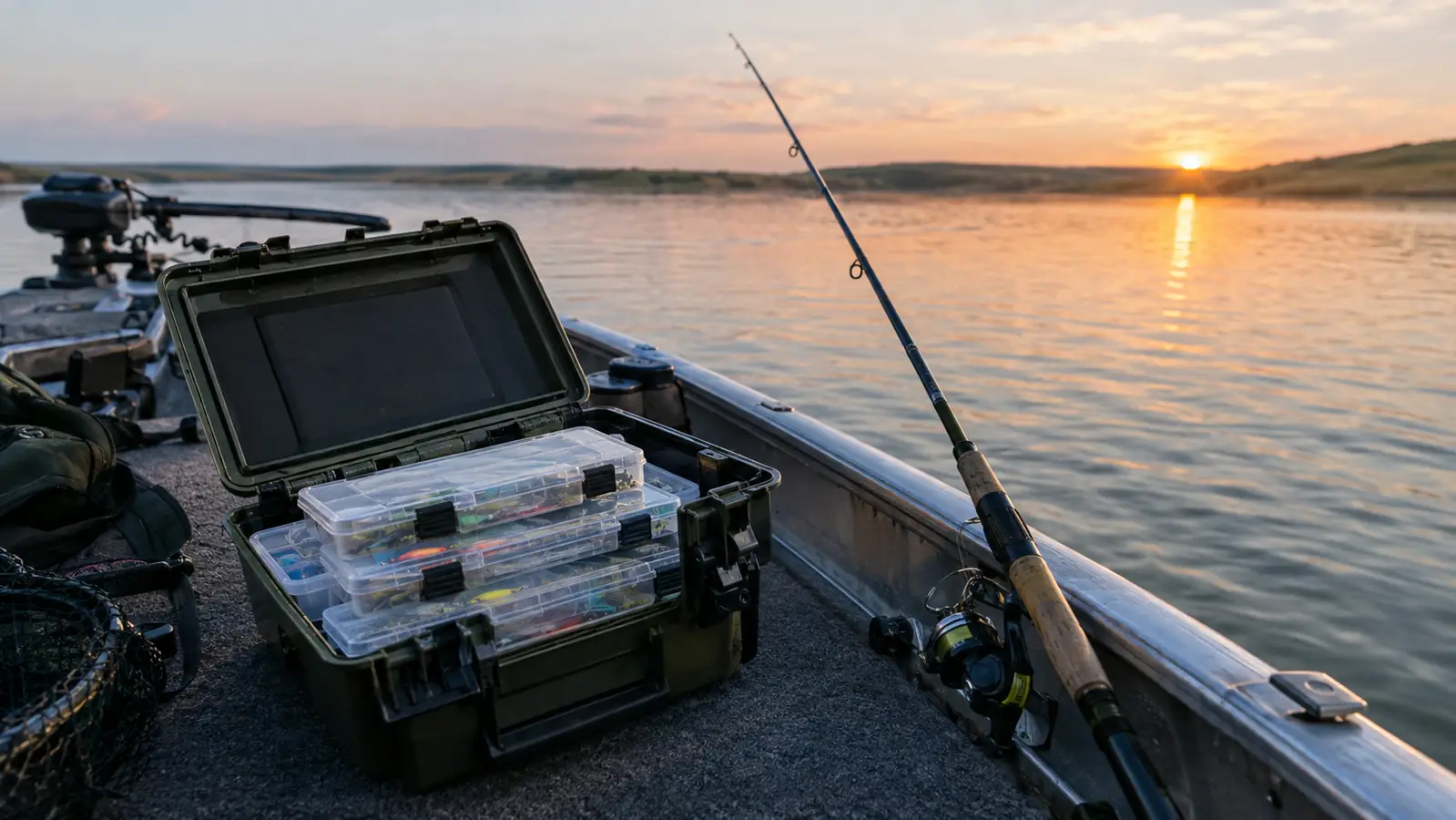
I will tell you straight: I bought the Plano Guide Series 4-By Rack System in March of 2023, right before the walleye opener, and for the first month I thought it was the best money I had spent on boat organization in years. Two seasons later, after a summer of Missouri River trips, a fall of shore fishing, a hard winter of ice fishing, and one afternoon when a wave came over the bow and put six inches of water on the floor, I have a more honest opinion. The system is still on my boat. But there are things about it that nobody puts in the product photos, and you should know them before you hand over your money.
This is not a sponsored review and I am not going to tell you the Plano Guide Series is perfect, because it is not. It is a well-built, reasonably priced way to carry four 3700 utility boxes, and it has made my mornings on the water genuinely easier. It also has latches that wear, hardware that rusts if you ignore it, and a top compartment that sounds better in the description than it works in real life. Here is what I learned the hard way.
The Quick Verdict
The best rack system I have used for keeping 3700 boxes organized on a small boat, as long as you accept that the latches need care and the hardware will rust if you treat it like it is waterproof. It is not.
Amazon Check Today's Price →The rack system that has stayed on my boat for two full seasons
After two years of walleye trips, ice fishing, and one flooded floor, the Plano Guide Series 4-By Rack System is still the first thing I grab when I head out. Check today's price on Amazon and see if it fits your boat.
Amazon Check Today's Price on Amazon →How I Have Used It
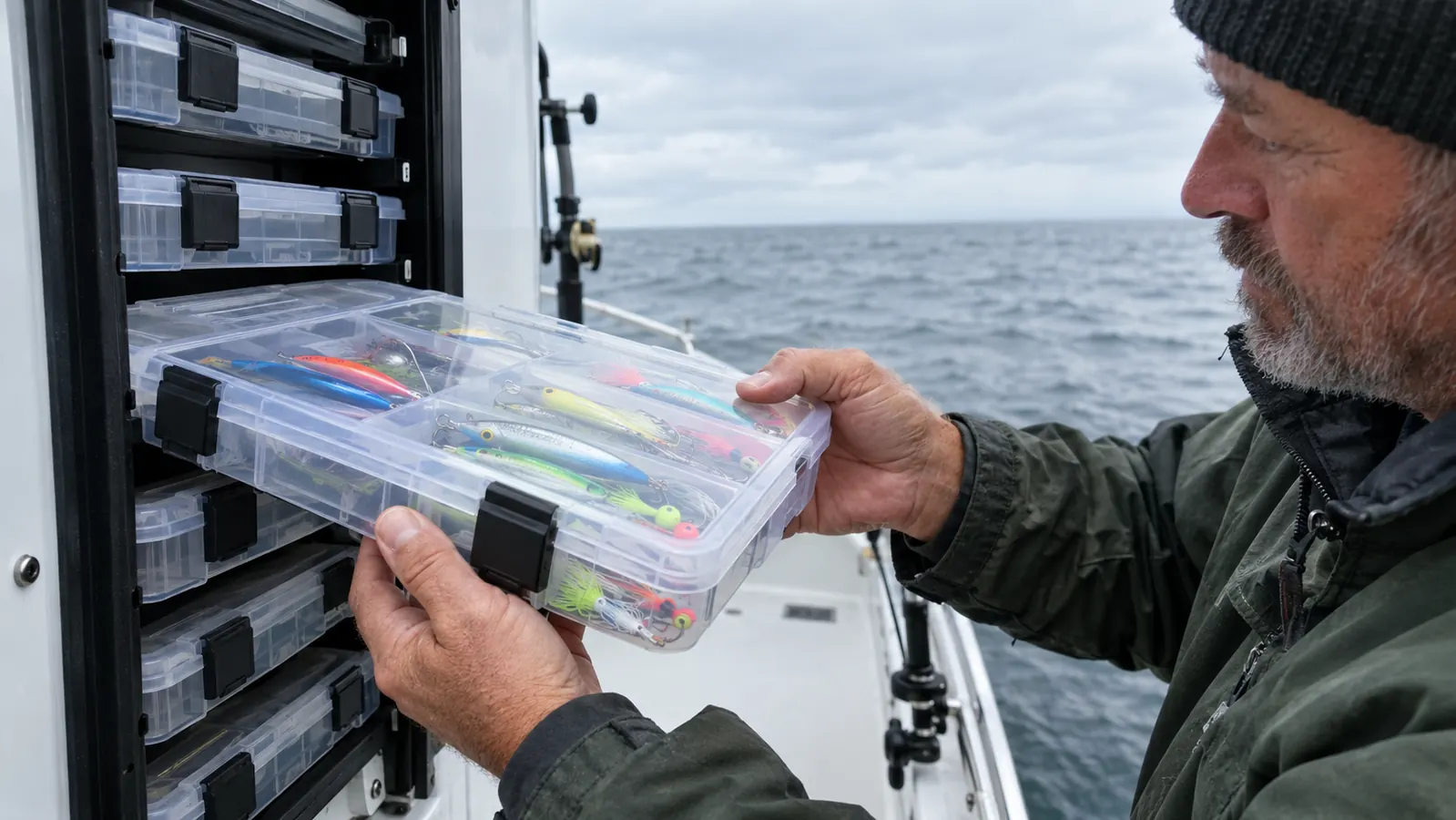
My setup is a 16-foot aluminum boat, the kind with a tiller motor and more dents than paint. Before the Plano Guide Series, I carried three soft tackle bags and a milk crate, and every trip started with ten minutes of digging through bags that had shifted overnight. I bought the 4-By Rack System because it bolts to the front deck and holds four 3700 utility boxes flat, which means I can see every box before I open it.
In the first season I ran it with two boxes of walleye jigs, one box of crankbaits, and one box of pike spoons and leaders. By the second season I had swapped the crankbait box for a second jig box, because that is what the fishing on my home waters actually demanded. That is the real strength of this system: you can reconfigure it in about thirty seconds, and the boxes are cheap enough that you can own a set for every kind of fishing you do.
I have used it on the Missouri River reservoirs in a stiff south wind, on glacial lakes where the chop comes up fast, and through a full South Dakota winter on the ice. The rack itself has never loosened, never cracked, and never let a box bounce out, even when I hit a wave wrong and took water over the bow. That afternoon, with six inches of river water sloshing around the floor, the boxes stayed in the rack and the latches held. I cannot say the same for the soft bags I used to carry.
What Nobody Tells You About the Latches
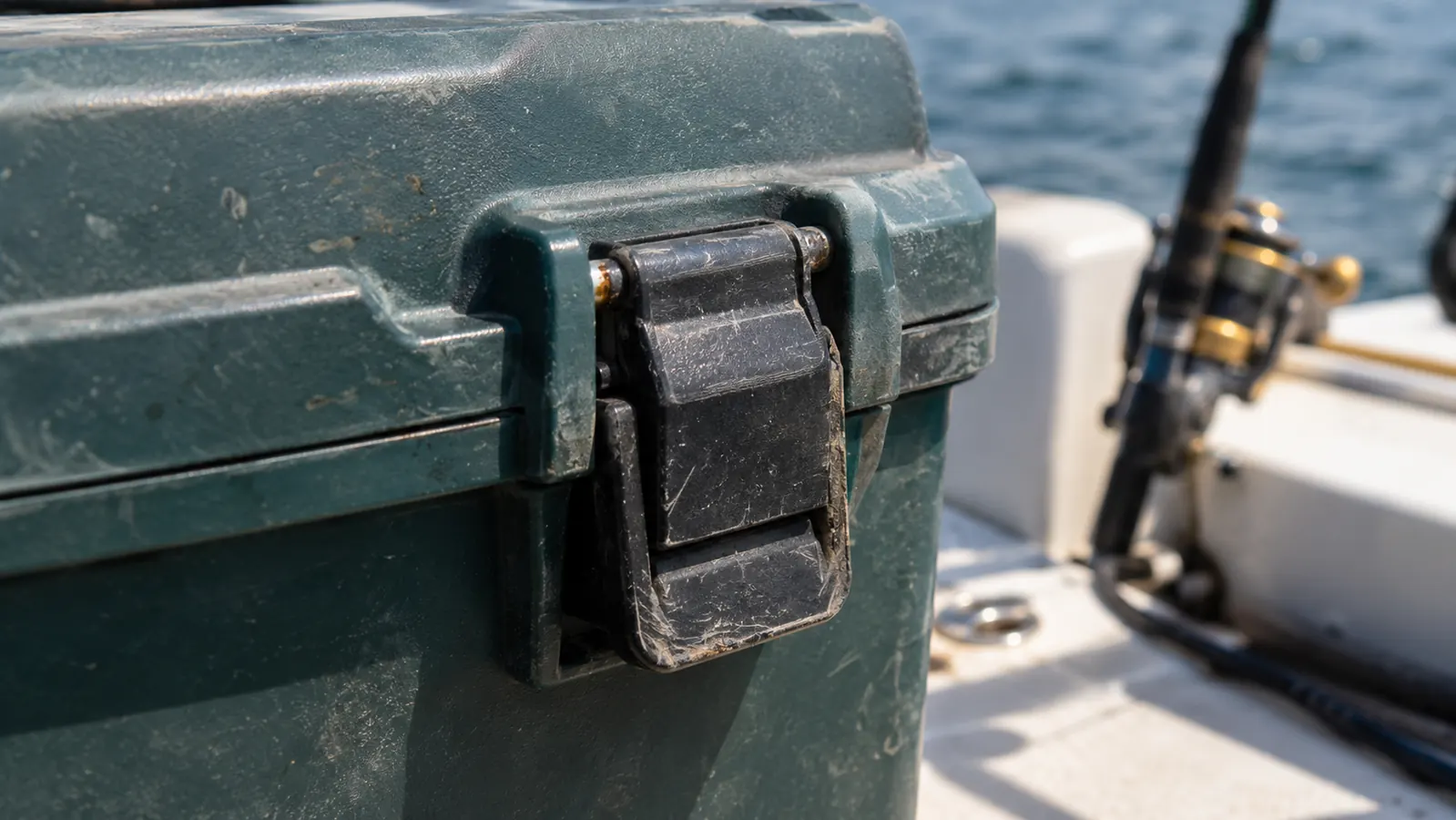
Here is the honest part. The latches on the Plano Guide Series rack are the same style Plano has used for years, and they work well when they are new. They snap shut with a solid click, they stay shut on rough water, and they are easy to open with cold fingers. What nobody tells you is that they wear. The plastic tabs that hold the latch closed start to round off after a season of hard use, especially if you are opening and closing them hundreds of times on a boat that is bouncing.
By the end of the first summer, two of my four boxes had latches that would pop open if I dropped the box on the deck from waist height. Not every time, but enough that I stopped trusting them. I fixed it the way I fix most things, with a small zip tie around the latch and the base, which is ugly but works. Plano sells replacement latches, and I have replaced two of them. The replacements are the same design, so I expect to do it again eventually. That is the tradeoff you are making with this system: the boxes are light and cheap, and the latches are the part that gives out first.
The other thing about the latches is that they are not waterproof. The boxes are water resistant, not watertight. If you leave them out in the rain, or if a wave comes over the side, water will find its way in through the latch seams and the lid edges. I learned this on a September trip when a thunderstorm caught me three miles from the ramp. I got back to the truck soaked, and the next morning every box had a quarter inch of water in the bottom. The jigs were fine, but the hooks on a few crankbaits had started to rust. Now I store the boxes with a silica pack in each one and I do not leave them in the boat overnight.
The Rust Question
Ask any angler who has owned this system for more than a year and they will eventually mention the hardware. The rack itself is plastic, and the plastic has held up fine. But the screws, washers, and the metal pins in the latches are not stainless. They are plated steel, and the plating wears off where the latch rubs. On my unit, the first rust showed up on the latch pins after about eight months, and it spread to the screw heads on the mounting brackets by the end of the second season.
I want to be fair here. I am hard on gear, and my boat lives outside under a tarp from April to November. If you store your boat in a garage and rinse your tackle after saltwater trips, you might never see a speck of rust. But if you are like me, and your gear lives in a truck bed or on a boat that sits outside, plan on replacing the mounting screws with stainless ones and wiping the latch pins with a light oil once or twice a year. That is a ten minute job and it will add years to the system. I did it this spring and the rust has not come back.
The rust is cosmetic in most cases. It has not affected how the rack holds the boxes, and it has not weakened anything structural. But it is the kind of thing that makes a product look old before its time, and it is the first thing I noticed when I pulled the system out of storage this spring. If you are the kind of person who likes gear to stay looking new, budget for stainless hardware from day one.
The boxes stayed in the rack and the latches held when six inches of river water came over the bow. That is the moment I stopped wishing I had bought something fancier.
The Top Compartment Reality Check
The product description makes a big deal of the quick-access top storage with the DuraView lid, and I will admit that is the reason I picked this model over a plain rack. The lid is clear, so you can see what is in the top compartment without opening it, and the compartment is big enough for the things you grab constantly: pliers, line clippers, a hook hone, a small spool of leader material. In theory, that means you never have to dig for your pliers again.
In practice, the top compartment is the part of the system I use the least. The lid is hinged at the back, and when it is open it blocks the view of the two front utility boxes. On a small boat, that means you have to lean around it or close it every time you want a jig from the front row. I also found that the compartment is shallow enough that my bigger reel oil bottle did not fit standing up, and the latch on the lid is the same wearing style as the box latches. After two seasons, the lid latch is the loosest one on the whole unit.
I still use the top compartment, but for a narrower set of things: a spare spool of 10-pound mono, a pack of hooks, a small first aid kit, and a lighter for retying knots in the wind. It is handy for those. It is not the quick-access dream the marketing suggests, and if the top compartment is the main reason you are considering this model, I would tell you to save the money and buy the plain rack version instead.
How It Holds Up on the Water
The real test of any tackle system is not how it looks in the driveway. It is what happens when you are running across a reservoir at 25 miles an hour into a two-foot chop, or when you are trying to grab a jig box while the boat rocks and the wind tries to take your hat. The Plano Guide Series rack has passed that test for me, with one caveat.
The rack holds the boxes securely because the boxes sit in a tray with a lip that wraps around the bottom edge. That lip is the reason a box has never bounced out, even on the rough afternoon when I took water over the bow. The tradeoff is that the lip makes the boxes slightly harder to grab. You cannot just lift a box straight up. You have to slide it forward and then lift, which is a small thing until your hands are wet and cold. On a November pike trip, with the air temperature at 28 degrees and my fingers going numb, I dropped a box of spoons twice before I got the hang of it.
The other thing I have noticed is that the rack changes the way you work a front deck. With soft bags, I used to set them on the floor and dig through them, which meant I was always crouching. With the rack, everything is at waist height, and I can see all four boxes at a glance. That sounds like a small thing, but when you are fishing low-light hours and trying to get back to the ramp before the wind comes up, it saves real time. I would guess I spend about a third less time messing with tackle on a typical trip, and that is time on the water actually fishing.
What I Would Change
If Plano asked me, I would make three changes. First, stainless hardware from the factory. The rust is the one thing that makes the system look cheap, and it would cost pennies per unit to fix. Second, a latch design that does not wear out. I understand that the simple latch keeps the price down, but I would happily pay five dollars more for a latch with a metal catch instead of a plastic tab. Third, I would make the top compartment lid removable, or at least make it hinge forward instead of back, so it does not block the front boxes.
None of those are deal breakers. They are the difference between a good product and a great one. The Plano Guide Series is a good product, and for the price it is a very good one. But it is not the last tackle system you will ever buy, and pretending otherwise does nobody any favors.
What I Liked
- Holds four 3700 utility boxes flat and secure, with a lip that keeps them in place on rough water
- Clear DuraView lid on the top compartment lets you see what is inside without opening it
- Reconfigurable in seconds; swap boxes for walleye, pike, or ice fishing as the season demands
- Solid plastic rack that has never cracked, loosened, or let a box bounce out in two seasons
- Reasonable price for what you get, and replacement utility boxes are cheap and easy to find
Where It Falls Short
- Latches wear out; plastic tabs round off after a season of hard use and need replacing
- Hardware is plated steel, not stainless, and will rust if the boat lives outside
- Top compartment lid hinges backward and blocks the front boxes when open
- Boxes are water resistant, not waterproof; rain and waves will find their way in
- The lip that secures the boxes makes them slightly harder to grab with cold, wet hands
Who This Is For
The Plano Guide Series 4-By Rack System is for the angler who fishes from a small boat, kayak, or shore and wants to stop digging through soft bags. It is for the person who owns a pile of 3700 utility boxes already, because that is the whole point of the system. It is for the walleye fisherman who wants to see every jig color at a glance before the sun comes up, and for the pike angler who wants a box of spoons and leaders ready to grab when the bite turns on. It is for the budget-minded person who would rather spend money on line and lures than on a fancy aluminum tackle station.
Who Should Skip It
Skip the Plano Guide Series if you fish from a big boat with a built-in tackle station, because you do not need it. Skip it if you need a fully waterproof system, because these boxes are not that. Skip it if you are hard on gear and never want to think about maintenance, because the latches and hardware will need attention eventually. And if the quick-access top compartment is the only reason you are looking at this model, I would tell you to buy the plain rack version and save the money. The top compartment is handy, but it is not the feature the marketing makes it out to be.
Still the rack I reach for every trip, rust and all
Two seasons in, the Plano Guide Series 4-By Rack System is still bolted to my front deck. It has its flaws, and now you know exactly what they are. If you want the same setup, check today's price on Amazon.
Amazon Check Today's Price on Amazon →