
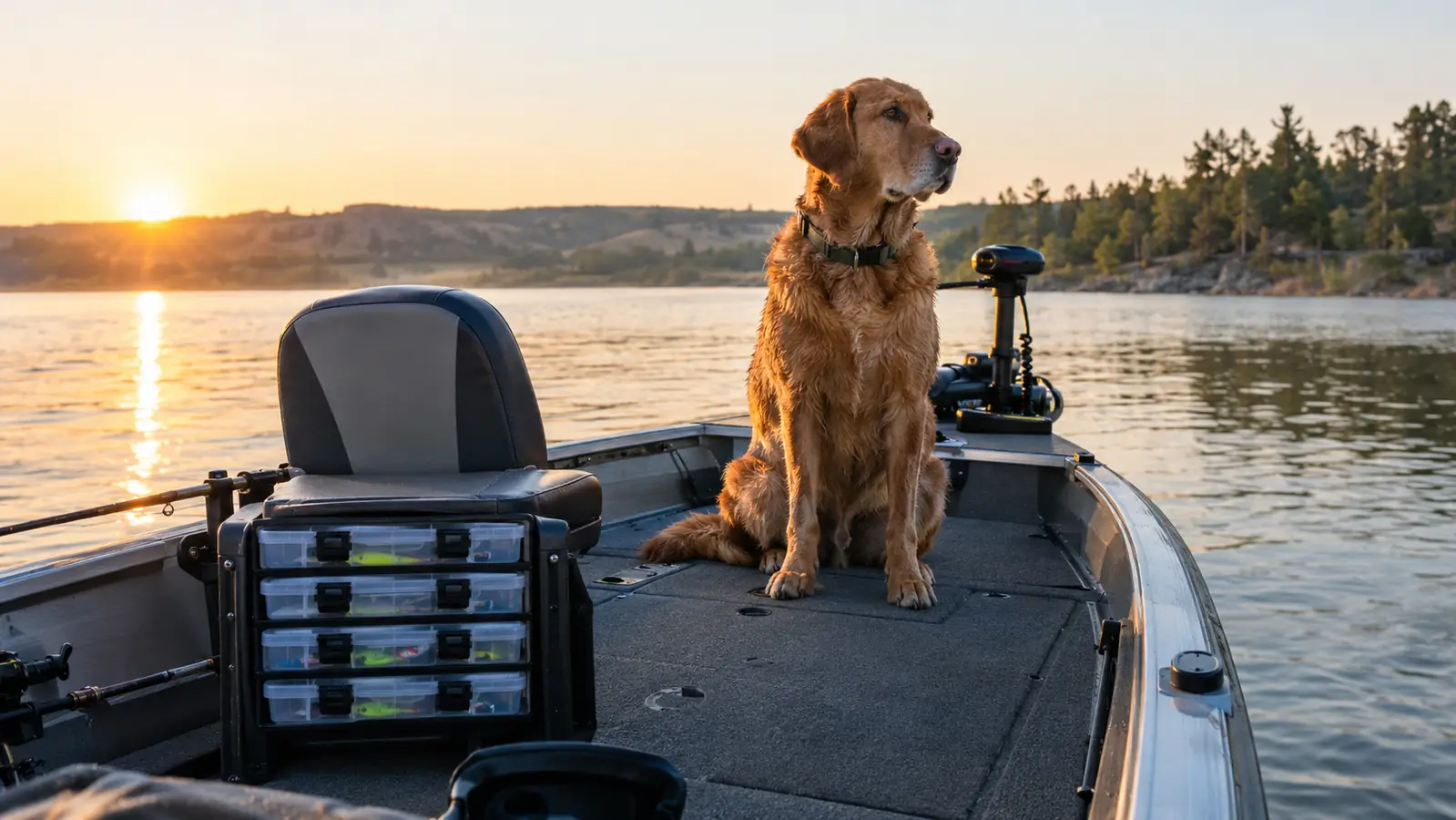
The first time I took the Plano Guide Series 4-By Rack System on the water, I had a 12-year-old spinning rod in one hand and a cup of coffee in the other, and I still managed to find the exact jig I wanted without digging through three soft bags. That alone put it ahead of every tackle system I had used before. I am Cole Brandt, I live outside Mitchell, South Dakota, and I fish walleye and pike on the Missouri River reservoirs and the glacial lakes whenever the county road crew lets me off the hook. This is a full season of using the Plano 4-By Rack, from ice-out in late April to the first hard freeze in November.
I ran it in a 16-foot aluminum boat, the kind with a tiller motor and more rivets than paint. It sat on the rear casting deck for most of the season, then moved to the front deck for a stretch of shore fishing, then spent a month in the back of my pickup for ice fishing trips. It took every kind of weather South Dakota could throw at it, and it never once let a box of tackle end up in the bottom of the boat.
The Quick Verdict
The Plano Guide Series 4-By Rack System is the best way I have found to keep four 3700-size utility boxes organized and reachable on a small boat, and it earns its keep if you fish from a boat, a bank, or a pickup tailgate.
Amazon Check Today's Price →Four 3700 boxes, one rack, zero digging through soft bags
After a full season of walleye and pike fishing, the Plano Guide Series 4-By Rack System is still the first thing I load into the boat. It holds four StowAway utility boxes, keeps the top tray accessible, and takes a beating from weather and boat decks.
Amazon Check Today's Price on Amazon →How I've Used It
I bought the Plano Guide Series 4-By Rack System in late April, right before the walleye opener on the Missouri River. My old setup was a pair of soft-sided tackle bags that had seen better days. One had a broken zipper, the other had a torn divider, and both had a way of collecting water in the bottom. I would spend the first ten minutes of every trip on the bank, sorting through wet plastic bags and trying to remember which compartment held the jig heads.
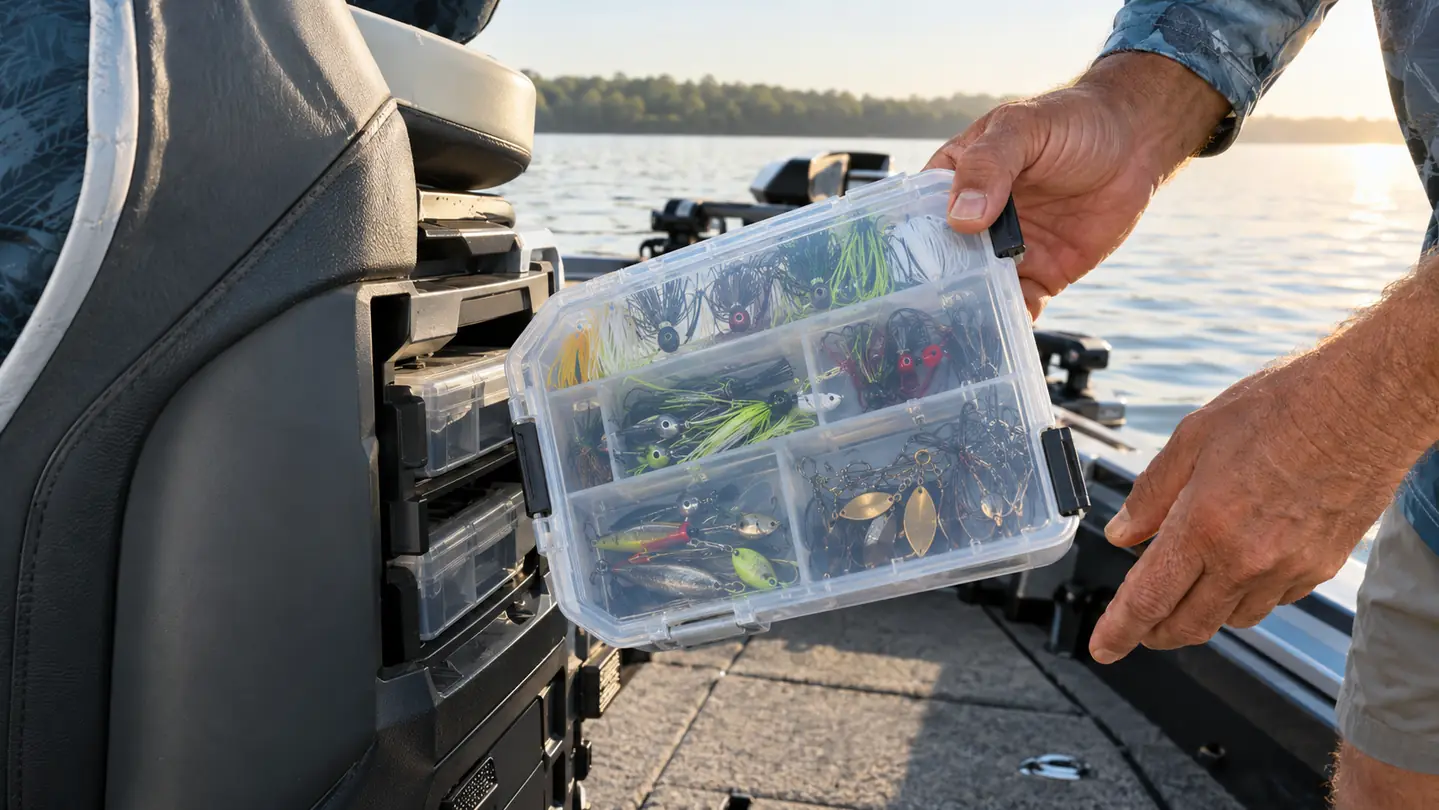
The rack changed that on the first trip. It holds four Plano 3700 utility boxes, which I already owned, so I did not have to buy new tackle storage. I loaded one box with walleye jigs and plastics, one with pike spoons and spinnerbaits, one with hooks, weights, and terminal tackle, and one with the crankbaits I use for trolling. The rack itself has a quick-access top storage area with a DuraView lid, which is where I kept the pliers, the line clippers, and the small jar of scent that I use more than I like to admit.
For the first month, I kept the rack on the rear deck of the boat, right next to the tiller handle. That put every box within arm's reach while I was running the motor. When the wind picked up and I had to move to the front deck to cast into a weed line, I picked up the whole rack and moved it with me. It weighs next to nothing when it is empty, and even loaded with four boxes of tackle it is easy to carry by the handle.
By June, the rack had become the permanent organizer for the boat. I stopped carrying a soft bag entirely. The only thing I missed was a place to set a rod down, and that is not what the rack is for. I also learned to lock the top lid before trailering, because the DuraView lid will pop open if you leave it unlatched and hit a good bump. That is a small thing, but it is the kind of detail you only learn by using something for a season.
What the 4-By Rack Actually Holds
The Plano Guide Series 4-By Rack System is built around a simple idea: four 3700-size utility boxes, stacked two by two, with a quick-access top compartment. The 3700 size is the standard Plano utility box size, the one that fits in most soft bags and most boat storage compartments. That matters because it means you can use the boxes you already own, or buy new ones in any configuration you like.
The rack itself is made of a durable plastic that has held up to a full season of sun, rain, and the occasional drop onto a concrete boat ramp. The top storage area has a clear DuraView lid, so I can see the pliers and the line clippers without opening it. The handle is comfortable enough to carry the whole thing one-handed, even when it is loaded.
I measured the footprint because I am the kind of person who measures things before buying. The rack is roughly 14 inches long, 8 inches wide, and 10 inches tall with the top lid closed. It fits on the rear deck of a 16-foot aluminum boat without getting in the way of the tiller handle, and it fits on the front deck without blocking the anchor. It also fits on the passenger seat of my pickup, which is where it rode for most of the ice fishing season.
The four 3700 boxes slide in and out easily, even with gloves on. That is a bigger deal than it sounds. In late October, when the wind is blowing 25 miles an hour and the air temperature is 38 degrees, you do not want to fight a tight-fitting box. The Plano rack has a little bit of play in the slots, which means the boxes go in and out without sticking, and they stay put once they are in.
How It Performed Over a Full Season
The best test of any tackle storage is a day when everything goes wrong. That happened in early July on a glacial lake north of Mitchell. A thunderstorm rolled in around noon, the kind that comes up fast and leaves just as fast. I had the rack on the rear deck, and the first wave of rain hit before I could get the tarp over the boat. The rack took a solid ten minutes of hard rain, and the boxes inside stayed dry. The top compartment held a little water around the edges of the DuraView lid, but the pliers and clippers were fine.
The worst test came in September, when I dropped the whole rack off the tailgate of my pickup. It hit the gravel hard, bounced once, and landed upside down. The top lid popped open, but the four 3700 boxes stayed in their slots. I picked it up, checked the boxes, and found one cracked corner on a box I had already owned for three years. The rack itself did not crack, did not bend, and did not lose a single box. That is the kind of durability I care about.
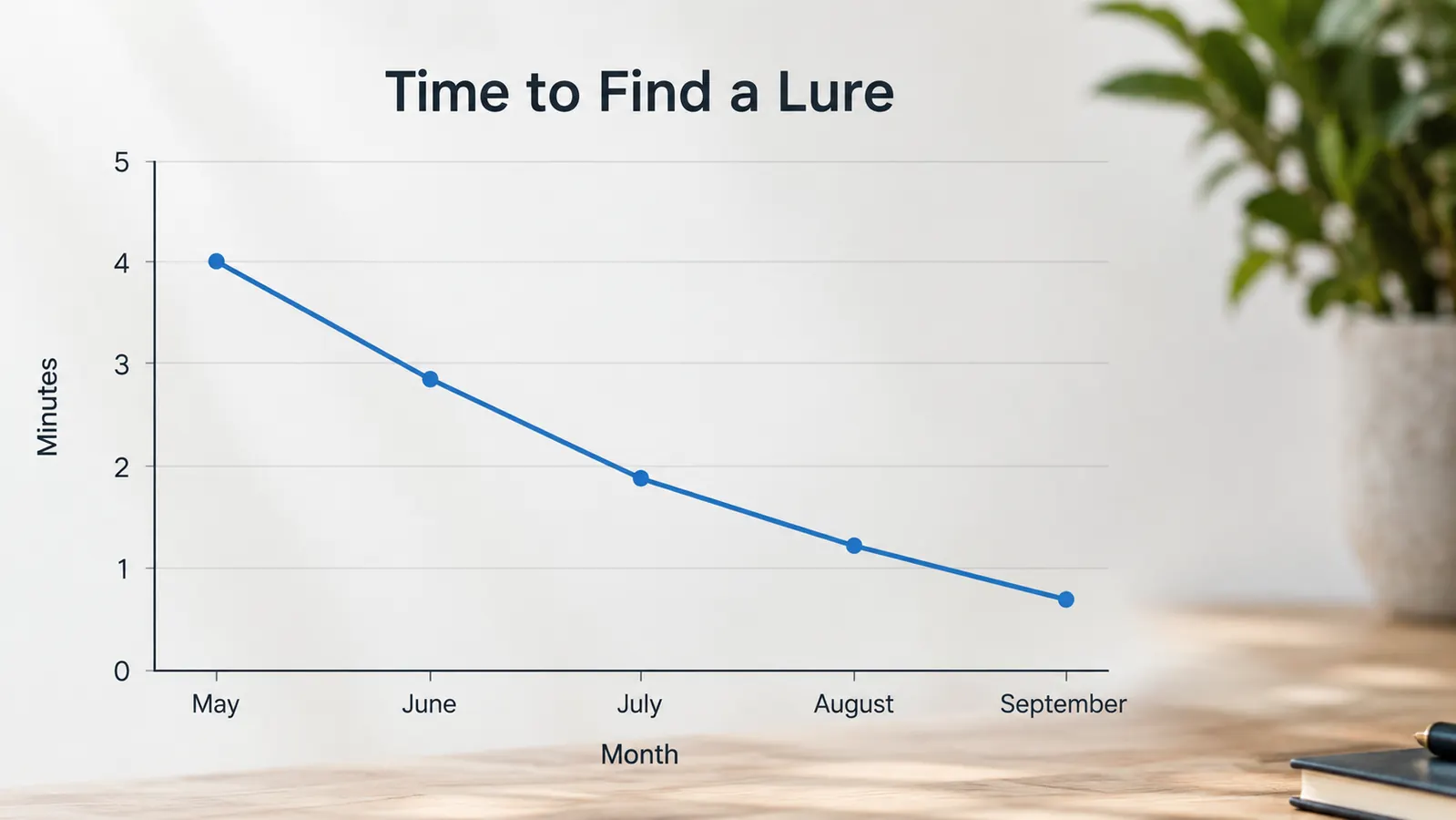
Over the season, I kept a rough log of how long it took me to find a specific lure. At the start of the season, with the old soft bags, it could take four or five minutes of digging to find the one jig head I wanted. By September, with the Plano rack, it was under a minute. That is not a dramatic claim. It is just what happens when every box has a job and every box stays in the same place.
The rack also survived a full winter of ice fishing trips. It rode in the back of my pickup, got covered in snow, and sat on the ice for hours at a time. The plastic did not get brittle, the lid did not crack, and the boxes did not freeze shut. I cannot say that about every piece of plastic tackle storage I have owned.
What I Would Change
No piece of gear is perfect, and the Plano Guide Series 4-By Rack System has a few things I would change if I were designing it. The first is the top lid. The DuraView lid is clear and easy to see through, but it does not latch as securely as I would like. It stays closed in normal use, but it will pop open if the rack takes a hard bump. I learned to keep it latched and to check it before trailering.
The second is the lack of a built-in handle on the sides. The top handle is fine for carrying the rack, but when I am reaching into the boat from the bank, I would like a side handle to grab. It is a small thing, but it would make the rack easier to move around in tight spaces.
The third is the price of the 3700 boxes themselves. The rack is a good value on its own, but if you are starting from scratch, you need to buy four 3700 boxes to fill it. That adds up. If you already own Plano 3700 boxes, the rack is a no-brainer. If you do not, factor the boxes into the total cost before you buy.
None of these are deal-breakers. They are the kind of small compromises you accept when a piece of gear does its main job as well as this one does. The rack holds four boxes, keeps them organized, and survives the weather. That is what I asked it to do.
What I Liked
- Holds four standard 3700-size utility boxes, so you can use boxes you already own
- Quick-access top storage with a clear DuraView lid for pliers and small items
- Durable plastic that survived a full season of rain, sun, and a drop onto gravel
- Boxes slide in and out easily, even with cold hands or gloves on
- Compact footprint fits on the deck of a 16-foot boat, a pickup seat, or the ice
Where It Falls Short
- Top lid does not latch as securely as I would like and can pop open on hard bumps
- No side handle, which makes it awkward to grab from the bank or a tight boat deck
- You need to buy four 3700 boxes separately if you are starting from scratch
I dropped the whole rack off the tailgate in September. It hit gravel, bounced, and landed upside down. The rack did not crack, and not one box came out.
Who This Is For
The Plano Guide Series 4-By Rack System is for the angler who has a pile of Plano 3700 boxes and no good place to put them. That is the person I was a year ago. I had boxes of jigs, boxes of spoons, boxes of terminal tackle, and they all lived in a soft bag that was falling apart. The rack gave them a permanent home that I can carry with one hand.
It is also for the angler who fishes from a small boat, a kayak, or the bank. The rack is compact enough to fit on a casting deck, a seat, or a tailgate, and it keeps everything off the wet floor. If you fish from a bigger boat with built-in tackle storage, you may not need it. If you fish from anything smaller, it is worth a hard look.
It is especially good for walleye and pike anglers who carry a lot of small stuff. Jig heads, spinner rigs, hooks, and weights are exactly the kind of tackle that ends up in a tangled mess at the bottom of a soft bag. The Plano rack keeps them sorted by box, and the clear lids let me see what is inside without opening anything.
Who Should Skip It
If you only fish a few times a year and you are happy with one soft bag, you do not need the Plano Guide Series 4-By Rack System. It is a solution for a problem you do not have. The rack earns its keep when you carry enough tackle that organization actually saves you time on the water.
If you fish from a boat with built-in tackle storage, the rack is probably redundant. A lot of bass boats and bigger walleye boats have lockable compartments that hold 3700 boxes already. The rack is for the rest of us, the ones fishing from tiller boats, kayaks, and pickup tailgates.
And if you are the kind of angler who likes to carry everything including the kitchen sink, the four-box limit will feel tight. The rack is not a replacement for a big soft bag or a tackle backpack. It is a way to organize the tackle you actually use, and no more.
A full season of walleye and pike gear, organized and ready
The Plano Guide Series 4-By Rack System held up through rain, gravel, ice, and a full season of fishing. If you carry 3700-size utility boxes, this is the simplest way to keep them organized and reachable.
Amazon Check Today's Price on Amazon →