
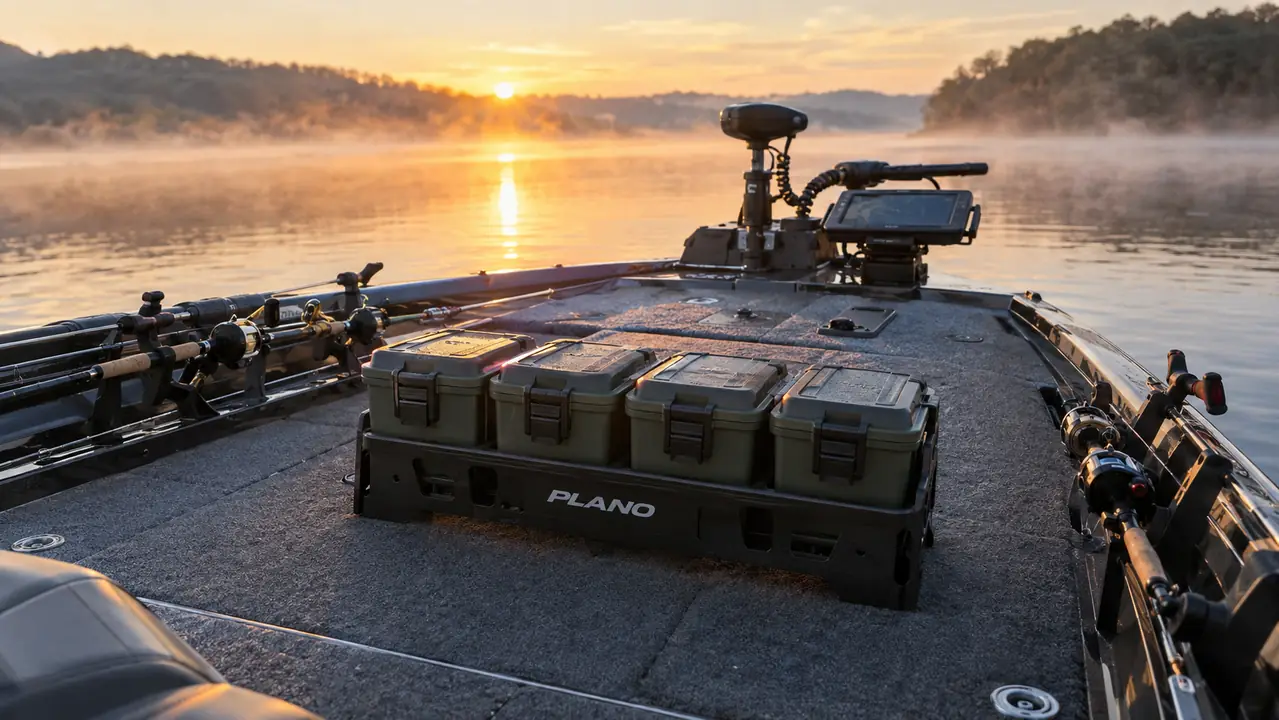
I've been chasing walleye and pike on Lake Francis Case, Lake Sharpe, and the other Missouri River reservoirs for close to thirty years, and I've burned through my share of tackle organizers. The battle between rigid utility boxes and soft-sided bags has been around since I bought my first 16-foot aluminum boat back in the late eighties, and the answer isn't as simple as "hard boxes are better." It depends on whether you're running a boat deck or walking a bank. Most mornings I'm out from a boat, and the Plano Guide Series StowAway 4-By Rack System has been on that deck with me for two full seasons. It's taken rain, wind, a spilled coffee, and the usual chaos of a buddy reaching past it for a jig. It still clicks shut the way it did out of the box, and the hinges haven't loosened up a bit.
So which holds up better? The Plano 4-By Rack System handles the daily abuse of a boat: dropped rods, wet seats, and the temptation to stack a big tackle bag on top of it. A soft bag wins when you need to carry your gear a quarter mile to a shoreline spot or stuff it in the trunk of a car. This review is about that tradeoff, because once you know what you're asking your tackle to do, the call is pretty clean. I've used both on the same lakes and the same days, switching back and forth just to see if the soft bag could ever catch up. It does some things better, like portability. It just doesn't do the things the Plano does half as well.
| Plano 4-By Rack System | Soft Tackle Bag | |
|---|---|---|
| Impact protection | Rigid polycarbonate lids and nested 3700 boxes keep hooks and jigs from crushing each other. Even an accidental drop from the bow onto the aluminum deck leaves everything looking brand new. | Soft sides flex, and a heavy cooler or tackle bag stacked on top can pinch the plastic boxes inside, bending lids and cracking corners. |
| Carrying comfort | No shoulder strap; you're hauling it with two hands or the built-in handle, awkward when you've already got rods and a net. | Padded shoulder strap balances the load and leaves a hand free for a coffee or a rod. A full bag hangs easier than a stiff rack. |
| Organization | Four 3700 boxes click into a fixed rack, each flips open on its own, and you can label them and grab a specific box without digging through a pile. The boxes stay upright, so you can read the labels without emptying anything. | Separate boxes tumble together in a bag; you're either using a binder or shoving everything into one cavern, and you end up rummaging every trip. |
| Weather resistance | Spring-loaded lids seal tight; rain sheds off the rack and the boxes sit up off the deck, so spray from a wake doesn't soak them. The gasket around the DuraView lid keeps even a three-gallon swell from getting inside. | Zippers and nylon can wick moisture if the bag sits on a wet bench or you drop it in three inches of water. A soaked bag means soaked boxes. |
| Boat stability | Fits under a boat seat or mounts to the floor with optional rail mounts, stays put even when you're pounding through a chop. No bungee cords needed. | Soft bags slide around the deck unless you tie them down, and they take up more floor space when they're full. |
| Cost over time | More upfront for the rack plus four boxes, but the rack body and hinges are built to outlast several sets of boxes. No zippers to break. | Often cheaper to start, but zippers and stitching fail after a season or two, and you may replace the bag while the boxes inside are still fine. |
| Cleaning | Wipe the rack down with a rag and it's done. Spilled WD-40, fish slime, and coffee wipe right off the smooth plastic. | Soft fabric absorbs smells and stains, and you have to work at getting blood or bait juice out of the lining. |
Where the Plano Wins
The Plano 4-By Rack System earns its keep the moment you're bouncing across a shallow flat at 25 mph. On a July morning last year, my buddy Rob left his soft bag lying flat on the deck, and a swell put about three gallons of water over it before we slowed down. By the time we got to the next point, his hooks were rusted, his crankbaits had become a tangled bird's nest, and he spent the next two hours re-spooling line instead of fishing. My rack sat on the casting deck with its latches closed, and every one of those four 3700 utility boxes stayed dry as powder. The rubber gasket around the DuraView lid doesn't just keep rain out; it keeps the spray from a wake from working its way past the latch. That's the difference I notice every time I'm out, and it's the reason I stopped worrying about a sudden squall mid-lake. We've had days when the wind kicked up to twenty knots and a wave caught the gunwale, sending a sheet of water across the whole deck. The rack stood there like it was built for it, because it was. It's not a piece of gear you have to baby. It shrugs off the weather and the abuse and just keeps carrying its load.
It's not just moisture. A soft bag sits on the boat floor like a lump, and anything heavy that lands on it flattens the boxes inside. I stepped on a friend's paperback once and crushed the top tray, spilling a dozen jigs into his bag. With the rack, the load spreads across the rigid top and down the sides, so a cooler or a tackle bag stacked on top doesn't distort anything. The four 3700 boxes are held in slots that keep them from sliding around even when the boat is pounding into three-foot waves. That means I can grab the jig box mid-drift without dumping lures on the carpet. That organization is why I've stuck with the rack: I know exactly which box holds the crawler harnesses and which one has the split shots, and I can swap them in under ten seconds. Two months ago, during a walleye bite on Lake Sharpe, the sun had already set and I was fishing in the dark. I reached into the rack, pulled the jig box, and had a new jig tied on in the time it took my buddy to dig through his bag with a headlamp. That speed matters when the fish are hitting. When the bite is hot, you don't want to be pawing through a bag trying to find the right hook.
Even in winter, the rack proves its worth. When I'm ice fishing on the glacial lakes, the rack sits in the sled next to the auger, and the boxes stay dry even when the sled busts through a drift and snow gets piled on top. The rigid lids don't freeze shut, and the gaskets keep the wind from drying out my plastics. A soft bag on an ice sled would be wet, frozen, and about as useful as a screen door on a submarine.
Where a Soft Tackle Bag Wins
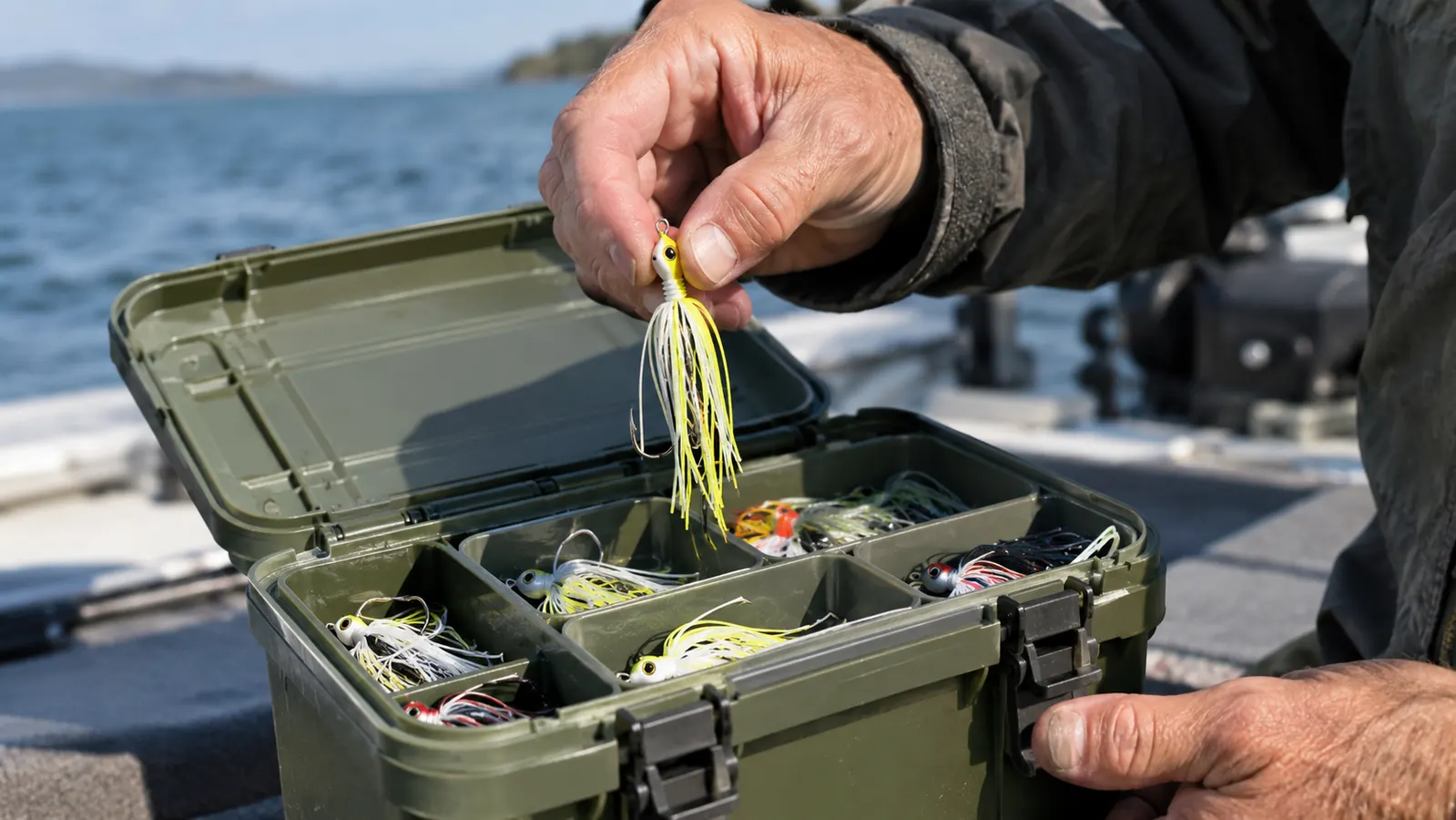
But the soft bag has a real ace up its sleeve when your feet are on shore. I do a fair amount of bank fishing on smaller glacial lakes like Wall Lake and Lake Poinsett, and the walk from the truck to the point can be a quarter mile through brush and muck. A shoulder bag with a padded strap rides easy, keeps my hands free for a spinning rod and a landing net, and doesn't look like I'm hauling a case of beer. The Plano rack, loaded with four boxes, tips the scale at about thirteen pounds and there's no strap, so you're at the mercy of your grip and a plastic handle. If you're walking more than a hundred yards on a regular basis, the bag wins that argument hands down. I made that exact mile-long hike to a pike pond after parking at the gate last spring, and I was glad I'd left the rack in the truck. By the time I reached the spot, I wasn't winded and I still had both hands for my rod and a net. On that trip, I caught a 33-inch northern from shore, and the bag made it feel easy.
The bag also forgives you when you're not on the water. It collapses down to fit behind the seat of my full-size Chevy, or into the back of the Subaru we take to the lake when the truck's at the shop. A rack is a solid block that takes up the same footprint even when it's empty, which is a waste of space if you don't keep it in a boat. And if you like to carry three different boxes of walleye spinners plus a box of pike spoons plus a tray of jigs for a day of multispecies fishing, a big soft bag with separate pockets gives you more flexible storage. The tradeoff is that all that gear is one zipper away from spilling on the floorboard. I've seen it happen more than once, and I've spent ten minutes picking up a hundred bucktails from under the driver's seat after a bag slid off the seat in a parking lot. If you're careful, that's fine. But on a busy day, the rigid rack keeps its contents trapped even if you drop the whole thing. That peace of mind is worth something, even if the bag has the edge on portability.
Another spot the bag shines: when I'm just grabbing a spin rod and a couple of boxes to chase white bass from the bank for an hour after work. The bag holds the two or three boxes I need, and I'm not hauling the whole rack for a short session. It's about matching the kit to the trip.
Ready to stop fishing out of a wet, tangled mess?
The Plano 4-By Rack System keeps your 3700 boxes dry, organized, and right where you left them. See the current listing on Amazon and check the fit for your boat deck.
Amazon Check Today's Price on Amazon →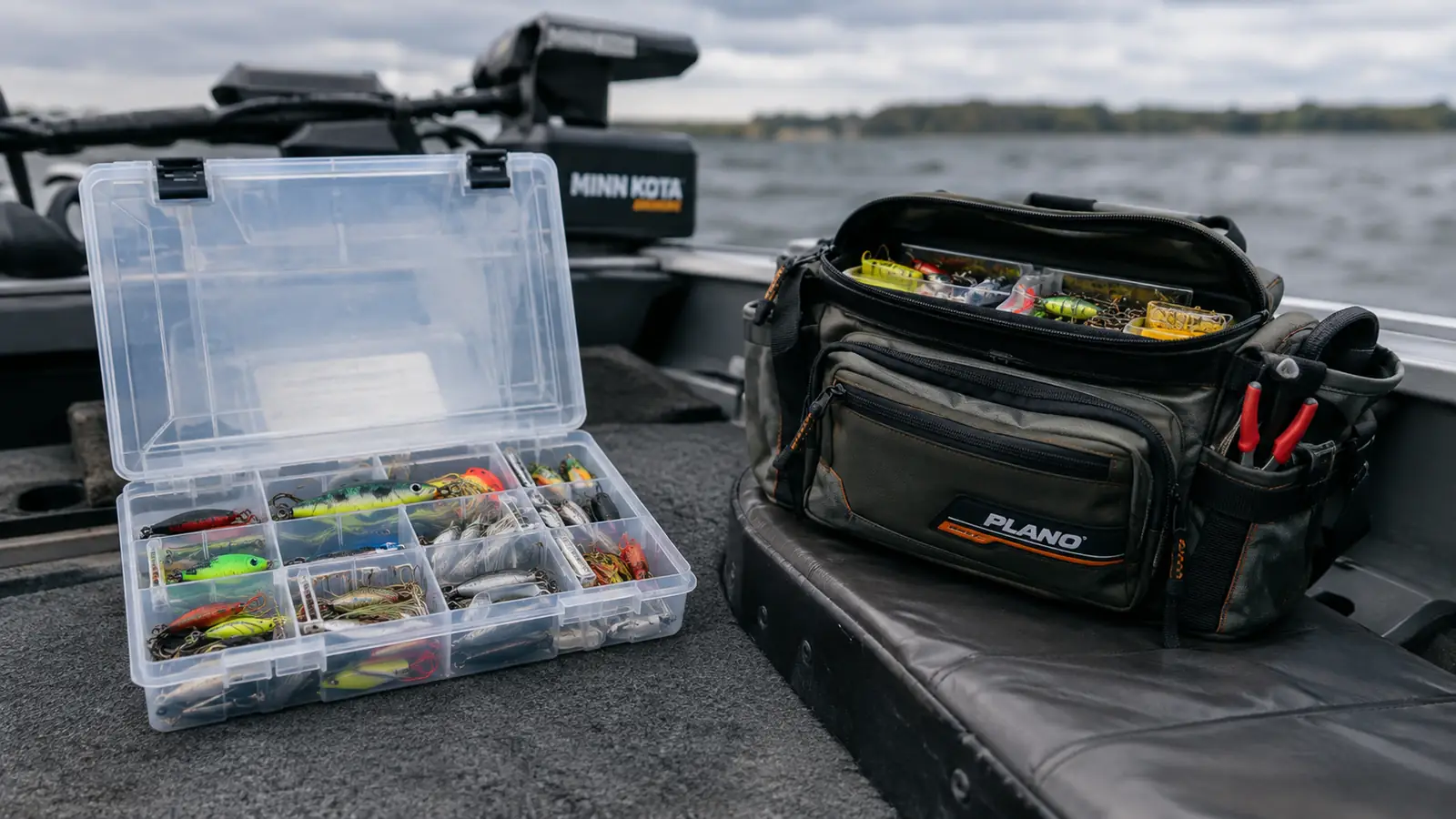
Who Should Buy Which
If you spend most of your fishing time in a boat, especially a tiller model with an open deck, the Plano 4-By Rack System is the right call. It sheds spray, protects the boxes, stays put, and makes it easy to find your gear fast. Grab one if you like to keep your tackle organized and you want something that won't let you down in a chop. I've used mine for two full seasons running walleye and pike on the Missouri River reservoirs, and it's never let me down. The only maintenance I've done is wiping it off with a rag after a muddy day. The rack body itself is a molded plastic frame that has held up to heat, cold, and being shoved in and out of a boat locker. No cracks, no warping, no broken hinges. It's built like a piece of farm equipment, not like a consumer gadget.
On the other side, if you mainly fish from the bank, or you lug your tackle in and out of the car every trip, a good soft bag will save your shoulder and your sanity. It's not about which one is better in some abstract sense; it's about which one matches the way you fish. I keep a soft bag in the truck for bank sessions and a rack in the boat for open water. That's not a compromise; that's just being practical. If you do the same, you'll understand why both have a place in the back of a pickup. The bag holds the overflow, the rack holds the essentials, and each one does its job without pretending to be the other.
One more thing that tips it for the rack in a boat: the 3700 boxes themselves are industry standard. You can buy extra boxes, label them, and swap them between the rack and a bag. That's the beauty of the Plano system. The boxes are the universal building block. Whether you're using a 3700 box for jigs, another for spinnerbaits, and a third for pike spoons, you can move them around depending on the trip. That flexibility is what makes the Plano name the standard after all these years. It's not the fanciest system, but it just works, and it keeps working.
If you're still on the fence, let me put it this way. The Plano 4-By Rack System is the piece of gear I never think about, and that's the highest compliment I can give a tackle organizer. It just sits there, does its job, and stays out of the way. A soft bag is something I think about every time I lift it onto my shoulder or dig through it with a headlamp. I own both, I use both, and I reach for the rack on the boat and the bag on the bank. If you're only going to buy one, base it on where your feet will be. And if your feet are on a boat deck, get the Plano.
The same rack I've trusted through two seasons
If you fish from a boat, this is the organizer to put on your deck. Check the Plano 4-By Rack System's current listing on Amazon and see what else is in the StowAway lineup.
Amazon Check Today's Price on Amazon →