
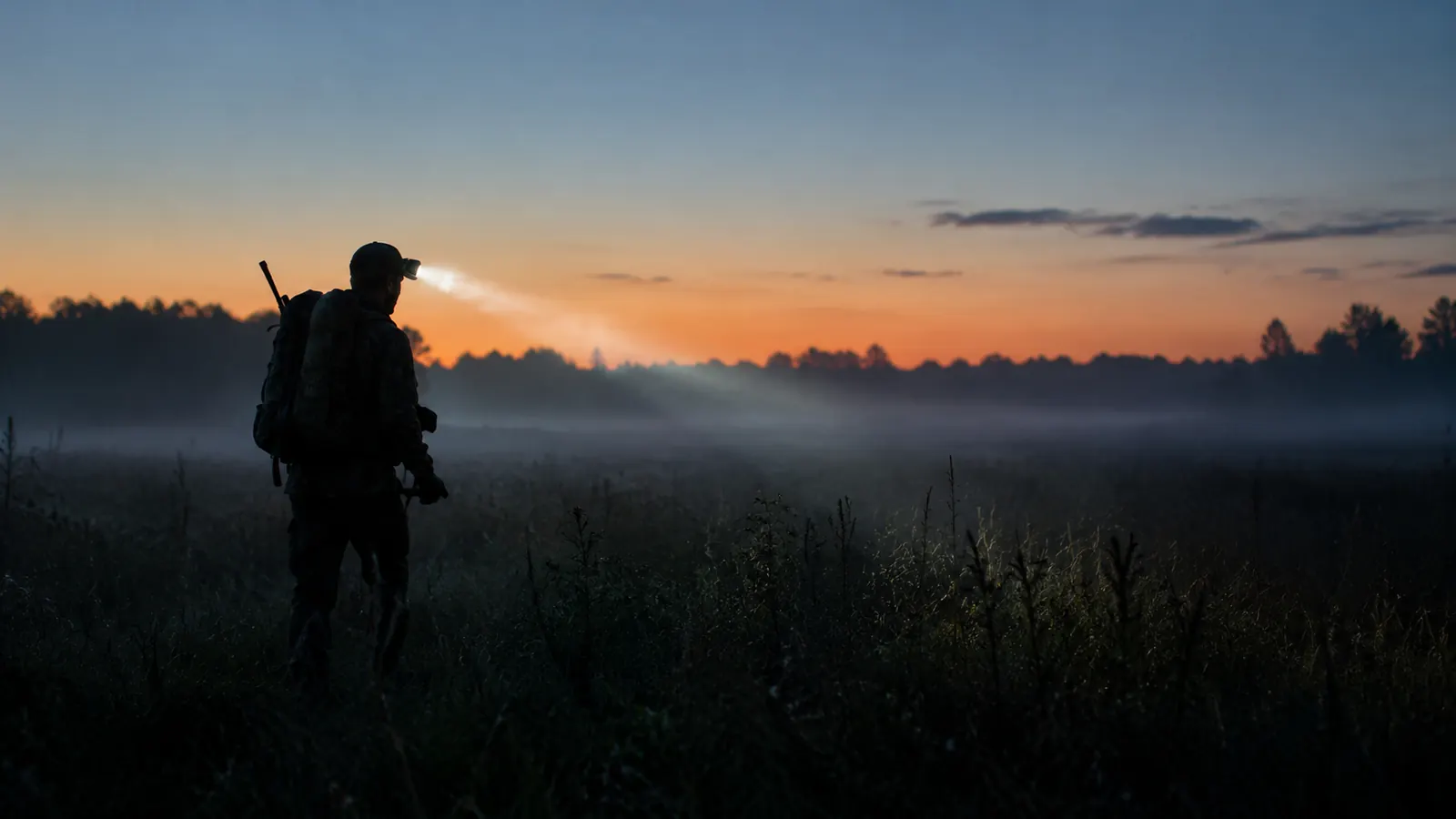
The worst part of deer hunting is not the cold. It is the walk in. You park the truck, you step out into the dark, and you know every deer within a quarter mile is listening to every step you take. I have been doing this for over thirty years, mostly on public land and a friend's farm ground outside Mitchell, South Dakota, and I have learned that the walk to the stand decides more mornings than the shot does. The right headlamp, used the right way, is the difference between settling into your stand before first light and watching a doe blow out of the timber at 6:40.
I have used a lot of headlamps over the years, from the old plastic jobs that ran on three AAs and died in November to the LHKNL headlamp I have been carrying for the past two seasons. It is a rechargeable LED unit that puts out plenty of light for a walk through the dark, and it has changed how I get to my stand. This is how I do it, step by step, the way I would tell a friend over coffee at the gas station.
Start the Walk With a Headlamp You Can Trust in the Dark
The LHKNL headlamp has been on my cap for two South Dakota seasons, through rain, snow, and single-digit mornings. It is bright enough for the walk in, dim enough for the last hundred yards, and rechargeable so you are never hunting for batteries at 5 a.m.
Amazon Check Today's Price on Amazon →Step 1: Get Your Eyes Ready Before You Leave the Truck
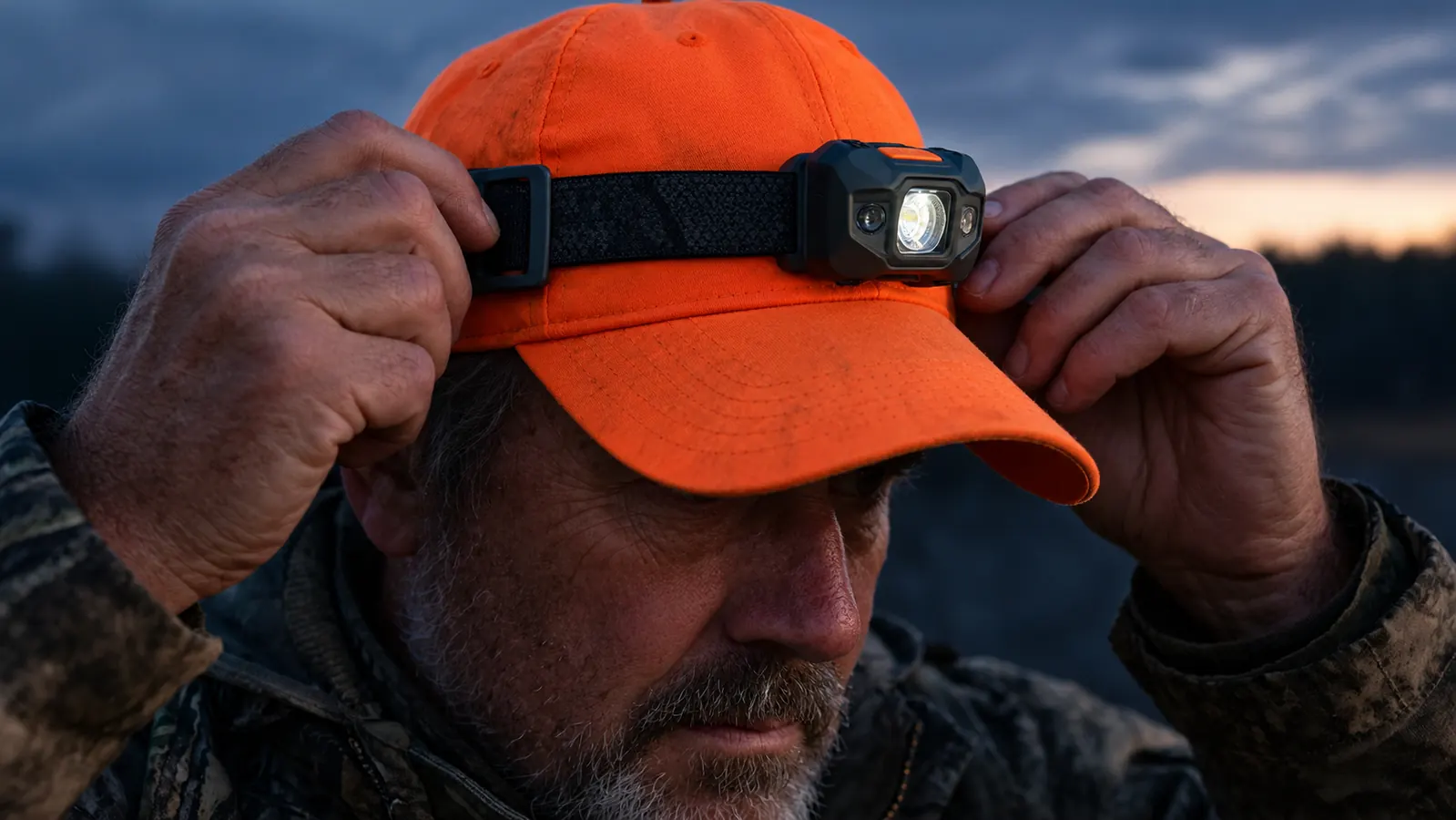
The biggest mistake new hunters make is turning on a bright light and walking straight into the dark. Your eyes never adjust, so you end up staring into a white wall of light, blind to everything outside the beam. I started doing this differently about ten years ago, and it made an immediate difference. Before I even open the truck door, I put the LHKNL headlamp on my cap, set it to the lowest setting, and give my eyes ten minutes to adjust while I lace my boots and check my gear.
That ten minutes matters more than any piece of gear you will buy. When your eyes are dark-adjusted, you do not need the light on full power to see the trail. You need just enough to keep from tripping over a root. The LHKNL has a low mode that is perfect for this. It throws a soft pool of light about ten feet in front of you, which is all you need when you are walking a familiar path. I have walked the same two hundred yards to my favorite stand for years, and on a clear night I can make most of it with the light off entirely.
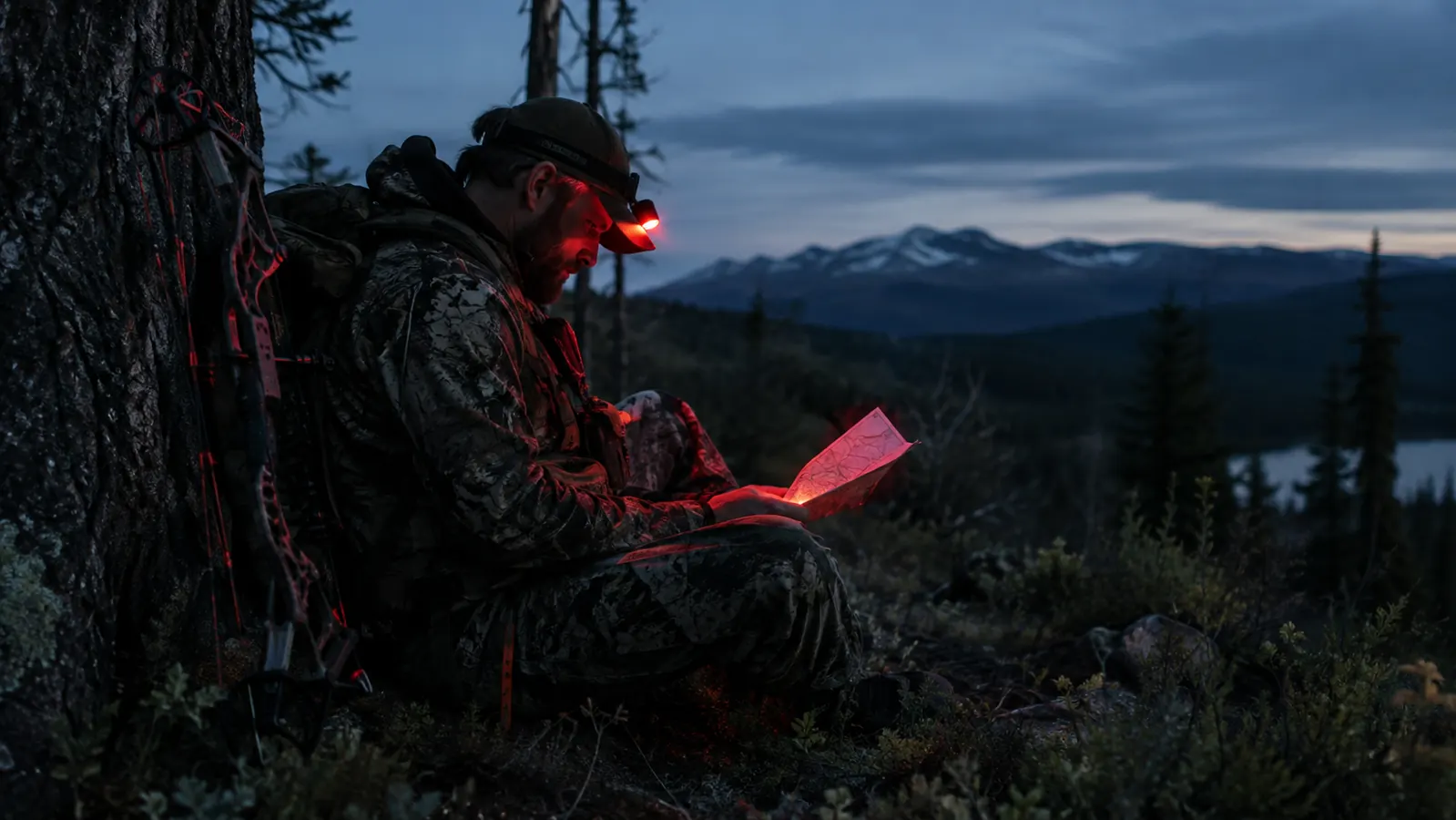
One thing I learned the hard way: do not look at your phone while you are waiting. That screen will wreck your night vision faster than any headlamp. If I need to check the time or look at a map, I do it with the phone face-down and the brightness turned all the way down, or I just skip it. The LHKNL has a red light mode that preserves your night vision, and I use that for anything I need to see up close, like adjusting my release or checking my watch.
Step 2: Use the Light Like a Flashlight, Not a Floodlight
The second mistake is treating a headlamp like a car headlight. You do not need to light up the whole field. You need to light up the next ten steps. When I walk in, I keep the LHKNL on its medium setting and point my head down toward the trail, not out across the field. The beam stays low, which means it does not catch the eyes of a deer bedded in the grass or standing at the edge of the timber.
I also walk slower than feels natural. It took me years to learn this. When you walk fast, you step on every dry leaf and every stick. When you walk slow, you can put your foot down where it is quiet. I aim for the dark patches on the trail, the bare dirt and the damp leaves, and I avoid the dry grass. On a frosty October morning, that is the difference between a quiet approach and a walk that sounds like someone shuffling a deck of cards.
The LHKNL has a wide beam that is good for this. It spreads the light out instead of concentrating it into a hot spot, so I can see the whole trail in front of me without moving my head much. That means less motion, and less motion means fewer deer that know I am coming. I have tested this on the same walk with the light on high and the light on medium, and the medium setting is the one that gets me to the stand without bumping deer.
Step 3: Kill the Light for the Last Hundred Yards
This is the step that most hunters never try, and it is the one that has saved more of my mornings than anything else. When I get within about a hundred yards of my stand, I turn the LHKNL off and walk the rest of the way in the dark. By that point my eyes have been adjusting for twenty minutes, and on most nights I can see well enough to follow the trail. The last hundred yards is where the deer are, and a light sweeping through the timber there is the fastest way to empty the area.
I will be honest: this took some getting used to. The first time I tried it, I walked into a low branch and spent the next ten minutes convincing myself I had not just given away my position. But I kept at it, and now it is automatic. I know where the big oak is, I know where the washout is, and I know where the trail bends. On a night with any moon at all, I can make that last hundred yards with the light off completely. On a cloudy, black night, I use the red light on the LHKNL, which gives me just enough to see the trail without the white beam that carries across the field.
The payoff came on a cold morning in late October last year. I killed the light at the usual spot, walked in quiet, and settled into my stand. At first light, a big doe fed out of the timber forty yards from my tree, and she never once looked my way. I am convinced that if I had walked in with the light on, she would have been gone before I ever got settled.
Step 4: Keep the Light Off Once You Are in the Stand
Getting to the stand is only half the battle. The other half is sitting there in the dark without turning on every light you own. I hang my LHKNL on a hook I screwed into the tree about chest height, with the beam pointed down at the base of the trunk. That way, if I need to check something, I can reach down and use it without moving my head or shining light out into the woods.
I also keep a small red light on a lanyard around my neck for the little things, like adjusting my bow or eating a granola bar. The red light does not carry the way a white light does, and it does not wreck my night vision. I learned this the hard way one November morning when I turned on a white light to find my release, and a buck that had been working his way down the ridge turned and walked the other way. I have not made that mistake since.
The LHKNL has a battery indicator that I check before I leave the truck, so I am not sitting in the stand wondering whether the light will make it through the walk back. It charges with a USB cable, and I top it off the night before every hunt. That sounds like a small thing, but when you are walking out of the timber at 9 a.m. after a long sit, the last thing you want is a dead headlamp.
Step 5: Save Some Battery for the Walk Out
The walk out is the part nobody talks about. You have been sitting for three or four hours, your legs are stiff, and you are not thinking as clearly as you were at 5 a.m. This is when people get turned around, trip over logs, and drop things. I always keep the LHKNL on its lowest setting for the walk out, even in full daylight, because I have learned that the walk back is when I am most likely to need it.
I also use the walk out to look for sign. With the light on low, I can see tracks and droppings on the trail that I missed in the dark. Last season I found a fresh rub line on the walk out that told me exactly where to set up the following week. That is the kind of information that makes the walk back feel less like a chore and more like part of the hunt.
One more thing: I always carry the LHKNL in my pack on the walk out, even if I am not wearing it. If I take a wrong turn or the weather turns, I have a light that I know is charged. I have been caught in a snow squall on the walk out before, and having a reliable headlamp made the difference between a bad story and a dangerous one.
What Else Helps
A headlamp is the most important piece of the walk-in puzzle, but it is not the only one. I wear a blaze orange cap and vest on the walk in, even in the dark, because you never know who else is walking in the same timber. I keep my boots laced snug but not tight, so my feet do not go numb during the sit. And I always carry a small flashlight in my coat pocket as a backup, because electronics fail and batteries die. The LHKNL has been reliable for me, but I do not trust any single piece of gear with my safety.
I also scout my walk-in route during daylight, every season, before the first hunt. I look for the quietest path, the one with the least dry leaves and the fewest low branches. I clear the worst of the deadfall with a saw so I am not climbing over logs in the dark. That hour of daylight work saves me twenty minutes of fumbling in the dark every single morning, and it is the cheapest insurance you can buy for a hunt.
The last hundred yards is where the deer are, and a light sweeping through the timber there is the fastest way to empty the area.
Make the Walk In the Quietest Part of Your Hunt
The LHKNL headlamp has earned its place in my pack for two seasons. It is bright when you need it, dim when you do not, and it charges off the same USB cable as your phone. If you are still walking in with a flashlight in your teeth, it is time to upgrade.
Amazon Check Today's Price on Amazon →