
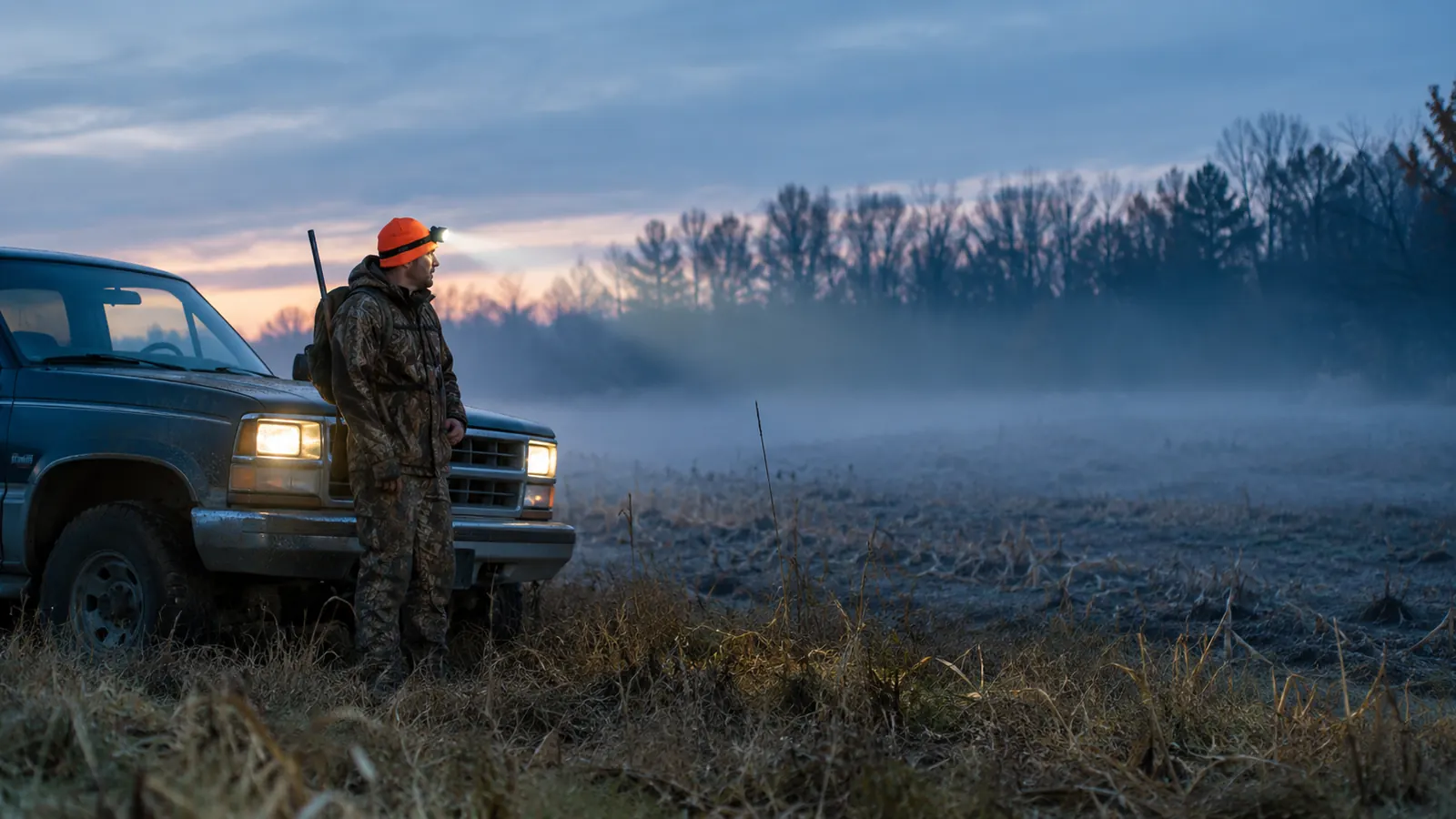
I have spent the last three months with two headlamps clipped to the visor of my pickup: the LHKNL Headlamp and a Nitecore that cost more than four times as much. I wanted to know whether a guy like me, who hunts whitetail and pheasant on public land and fishes walleye on the Missouri River reservoirs, actually needs a premium headlamp. The short answer is no. The longer answer is why I keep grabbing the LHKNL anyway, and the two places where the Nitecore genuinely earns its keep.
I am Cole Brandt, 51, from outside Mitchell, South Dakota. I work as a county road maintenance foreman, so most of my hunting and fishing happens before sunrise or after supper. My dog Tucker, a 7-year-old yellow Lab, goes on every pheasant hunt, and he has stepped on, knocked over, and drooled on just about every piece of gear I own. That context matters, because a headlamp that survives a South Dakota November is a headlamp that will survive almost anything.
| LHKNL Headlamp | Nitecore Headlamp | |
|---|---|---|
| Price | Budget friendly, often less on sale | Several times the cost |
| Brightness | Bright enough to walk a field edge and field dress a deer | Noticeably brighter, with a tighter hotspot at distance |
| Battery | Built-in rechargeable, plus it runs on AA batteries | Built-in rechargeable only |
| Runtime on high | About 3 hours on high, longer on medium | About 2 hours on high, longer on medium |
| Cold weather | Worked down to about 5 degrees on the ice | Worked down to about 5 degrees on the ice |
| Weight | Light enough to forget you are wearing it | A little heavier, feels more solid in the hand |
| Best for | Everyday hunting, fishing, and chores around the farm | Long-distance spotting and serious backcountry use |
Where the LHKNL Wins
The first thing I noticed was the price. The LHKNL cost me a fraction of what the Nitecore does, and it has replaced a pricier headlamp I bought three years ago. That old one still works, but it lives in the glovebox as a spare now. The LHKNL does everything I need it to do on a normal hunt: it lights up the path from the truck to the blind, it lets me see my boot laces when I am tying them in the dark, and it is bright enough to field dress a deer without me holding a flashlight in my teeth. On the morning of November 9, I used it to track a blood trail through a CRP field at 6:40 a.m., and I never once wished for more light.
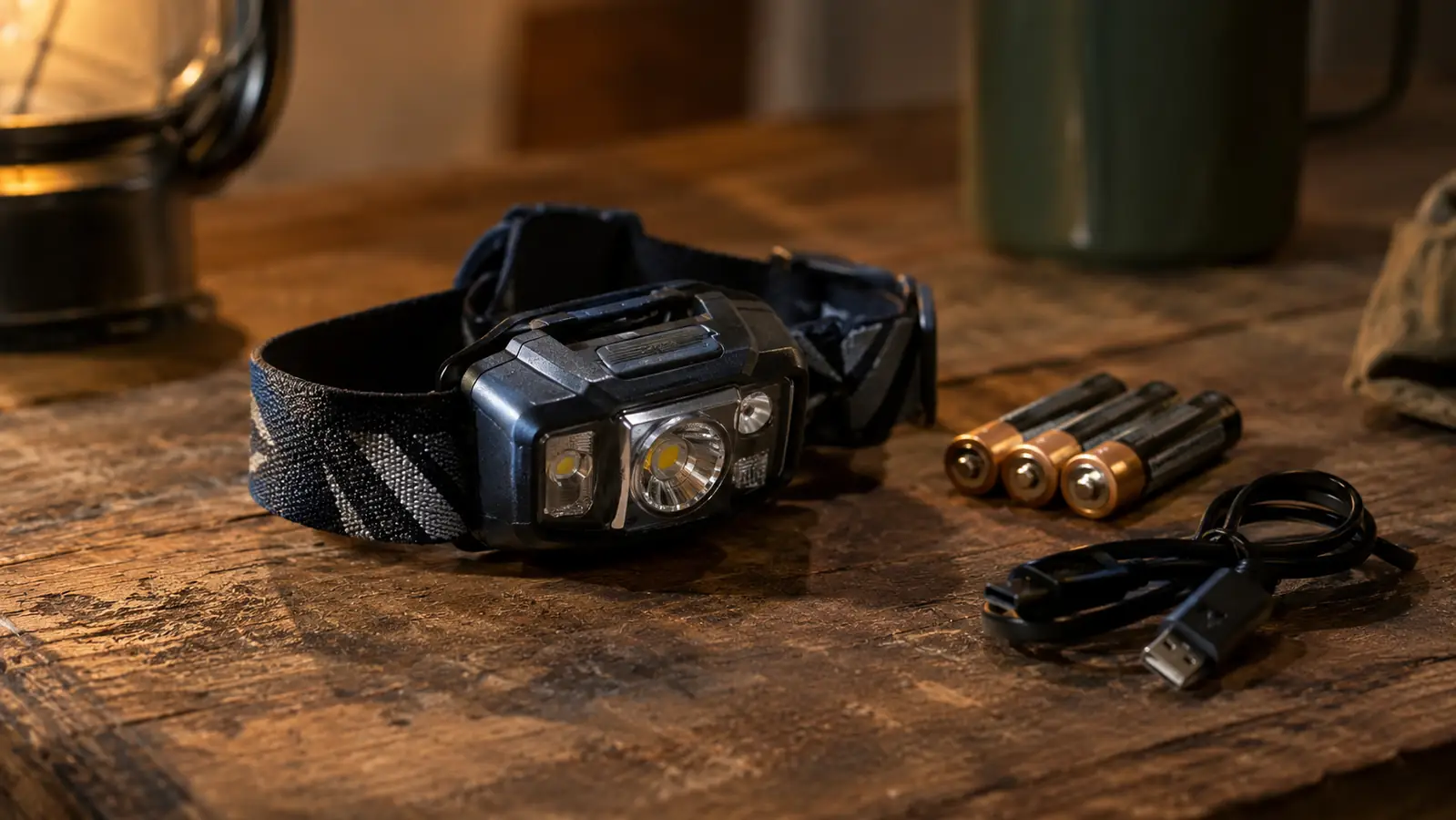
The battery setup is what sold me. The LHKNL has a built-in rechargeable battery, but it also takes AA batteries. That matters to me because I keep a box of AAs in the truck for my trail cameras, and when the headlamp died on a cold October morning, I swapped in two AAs and kept hunting. The Nitecore cannot do that. When its battery died on the ice in January, I had to walk back to the truck and wait for it to charge. That is a small thing until it is the difference between finishing a track and walking back to the truck.
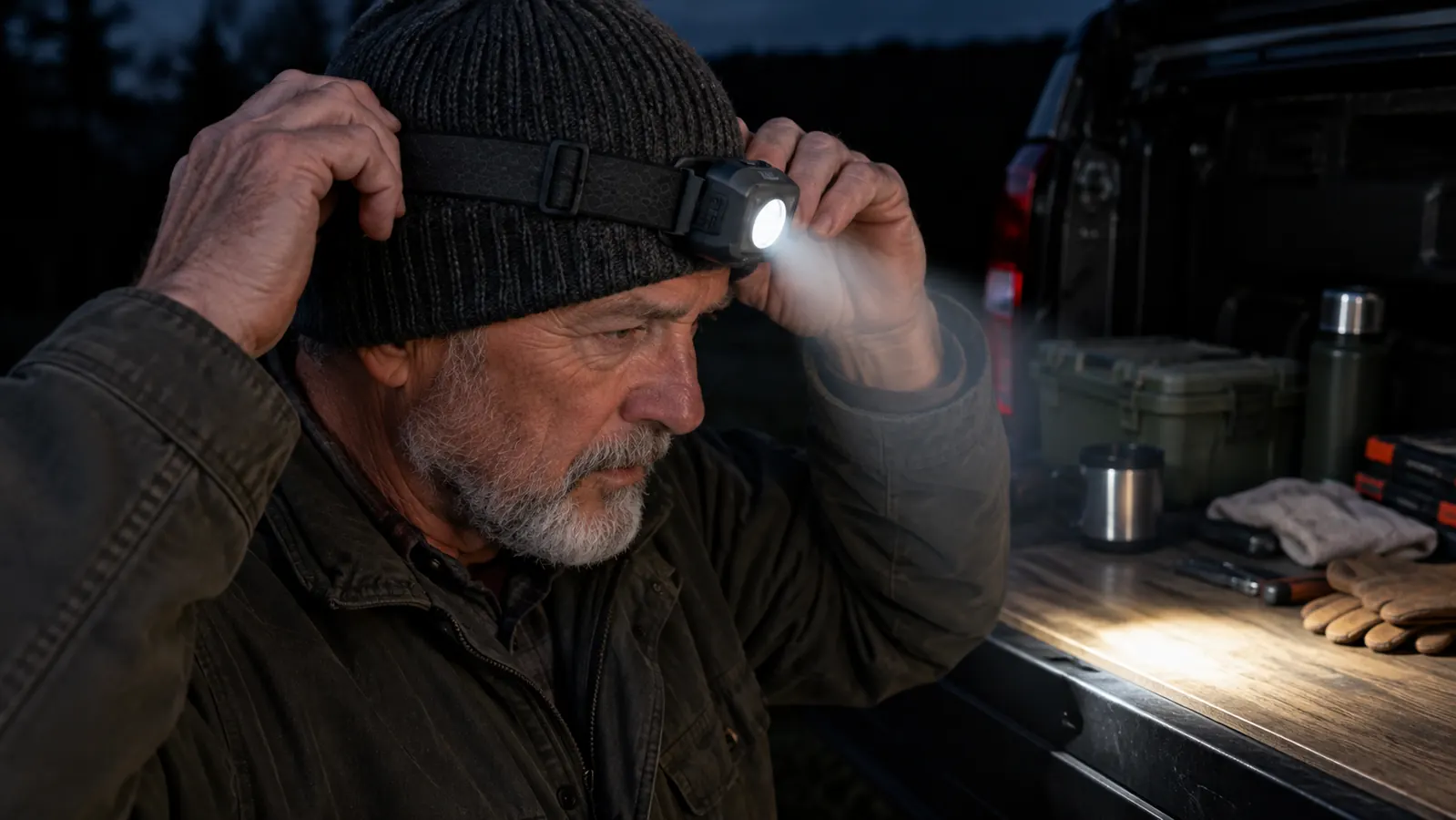
I also like the way the LHKNL sits on my head. I wear a knit cap under it most mornings, and the strap adjusts easily with one hand, even with gloves on. The light tilts down far enough that I can read a map or tie a fly without craning my neck. On a typical weekend I wear it for three or four hours at a stretch, and I forget it is there. The Nitecore is a little heavier and feels more solid, but I notice it more by the end of a long morning.
Where the Nitecore Wins
I will be honest: the Nitecore is a better light in two specific ways. The first is distance. When I am set up on a point on the Missouri River and I need to see a channel marker 80 yards out, the Nitecore throws a tighter, brighter beam that actually reaches it. The LHKNL spreads its light wider and softer, which is great for walking, but it fades out around 50 or 60 yards. For spotting ducks on the water before shooting light, or for checking a trail camera across a draw, the Nitecore is the one I reach for.
The second is build quality. The Nitecore feels like a tool you could drop off a ladder and not worry about. The body is machined aluminum, the switch is crisp, and the battery door has a real gasket. The LHKNL is mostly plastic, and after three months of riding in my truck and getting knocked around in my hunting pack, it has a few scuffs and one small crack near the lens. It still works fine, but I would not trust it to survive a hard fall onto concrete. The Nitecore would shrug that off.
Keep the Difference and Get the LHKNL
For the price of one Nitecore, you can buy three LHKNL headlamps and keep one in the truck, one in the boat, and one in the hunting pack. That is the kind of math that makes sense to a guy who buys his own gear.
Amazon Check Today's Price on Amazon →Brightness in the Real World
Lumen numbers sound impressive on a package, but what I care about is what I can actually see at the boat ramp at five in the morning. I backed the 16-foot boat into the water with each light on my head, a week apart, on the same ramp on Lake Francis Case. With the LHKNL on high, I could see the trailer bunks, the winch strap, and the waterline clearly. The Nitecore throws its beam farther, and I could see the end of the dock and the first buoy past it, which the LHKNL headlamp only showed as a gray shape.
That extra reach matters if you are walking a long way in the dark or scanning a far bank for a blood trail. It matters a lot less for the jobs I actually do most, which are tying knots, digging through a tackle box, and walking a quarter mile to a stand on a path I have walked a hundred times. For those jobs the LHKNL is plenty, and on a lower setting it is easier on the eyes up close.
Cold Weather Performance
South Dakota winters are hard on anything with a battery. I wore the LHKNL on the ice for a full morning at about eight degrees, drilling holes and checking tip-ups, and it stayed on the whole time without dimming in a way I could notice. By the time I got back to the truck the beam was a little dimmer on high, which is normal for lithium cells in the cold. I charged it off the truck's USB port on the drive home, and it was full again by the next morning.
The Nitecore handled the cold just as well, and it has a more solid feel in the hand, with a housing that seems like it would survive being stepped on. The LHKNL headlamp is lighter plastic. It has taken a few drops onto the ice and one onto a gravel boat ramp with no damage, but if you are rough on gear, the Nitecore will probably outlast it by a few seasons. That is a big part of what the higher price is buying.
Comfort Over a Long Morning
A headlamp you notice on your head is a headlamp you take off and leave in the truck. The LHKNL is light enough that I forget I am wearing it, even over a knit cap, and the strap stays put when I bend over to net a fish. The Nitecore is a little heavier and sits more forward on the forehead. It is not uncomfortable, but after three or four hours I was aware of it in a way I never was with the LHKNL.
Both straps can be adjusted with gloves on, and both lights tilt down far enough to light up your hands without craning your neck. The LHKNL's button is big enough to find by feel in the dark, which matters more than it sounds when you have fish slime on both hands and are fumbling to switch modes. I stopped noticing it after the first week, which is about the best compliment a headlamp button can get.
Charging and Batteries
Both lights charge over USB, which means one cable in the truck covers both of them, along with my phone. The LHKNL headlamp charges in a few hours and holds a charge well in the drawer between trips. The Nitecore charges a little faster. If you are heading out for a long weekend with no power, either one should get you through a couple of mornings, but I would still throw a small power bank in the bag for the LHKNL.
One more thing worth saying: I lose headlamps. I have left them hanging on a tree stand, dropped one through a hole in the ice, and found one months later under the seat of the pickup. That is a real cost of owning any headlamp, and it is a big reason I keep coming back to the LHKNL. When one goes missing, replacing it is not a decision I have to think about. I just order another and move on. With the Nitecore, losing it would bother me for the rest of the season.
I also keep a spare LHKNL in the glove box and another in the boat's dry bag. Having a light in each place means I am never caught without one, and it is only practical because the LHKNL headlamp costs so little. Owning three good-enough lights beats owning one great light that is always in the other vehicle.
If you are still on the fence, start with the LHKNL. Use it for a full season of early mornings at the boat ramp and walks to the stand. If you finish that season wishing for more reach or a tougher housing, you will know exactly why you are buying the Nitecore, and the LHKNL headlamp becomes your backup light in the glove box.
Who Should Buy Which
If you are a weekend hunter or angler like me, buy the LHKNL. It does everything you need, it runs on batteries you already have, and if you lose it or break it, you are out a small amount, not a big one. I have one in my truck, one in my boat, and one in my hunting pack, and I have not thought twice about any of them. The Nitecore is for the guy who needs maximum throw, who is going to be miles from a truck, or who wants one piece of gear that will outlast everything else in his pack. That is a real use case. It just is not mine.
My advice is simple: start with the LHKNL. Use it for a season. If you find yourself wishing for more distance or a tougher body, then go spend the extra on the Nitecore. But I suspect you will be like me, and you will end up with a drawer full of LHKNLs and a Nitecore that only comes out when the ducks are rafted up at the far end of the lake.
The Headlamp I Reach for Every Morning
After three months of cold mornings, blood trails, and ice fishing, the LHKNL is the headlamp clipped to my visor. It is cheap enough to own three, and good enough to trust with a track in the dark.
Amazon Check Today's Price on Amazon →