
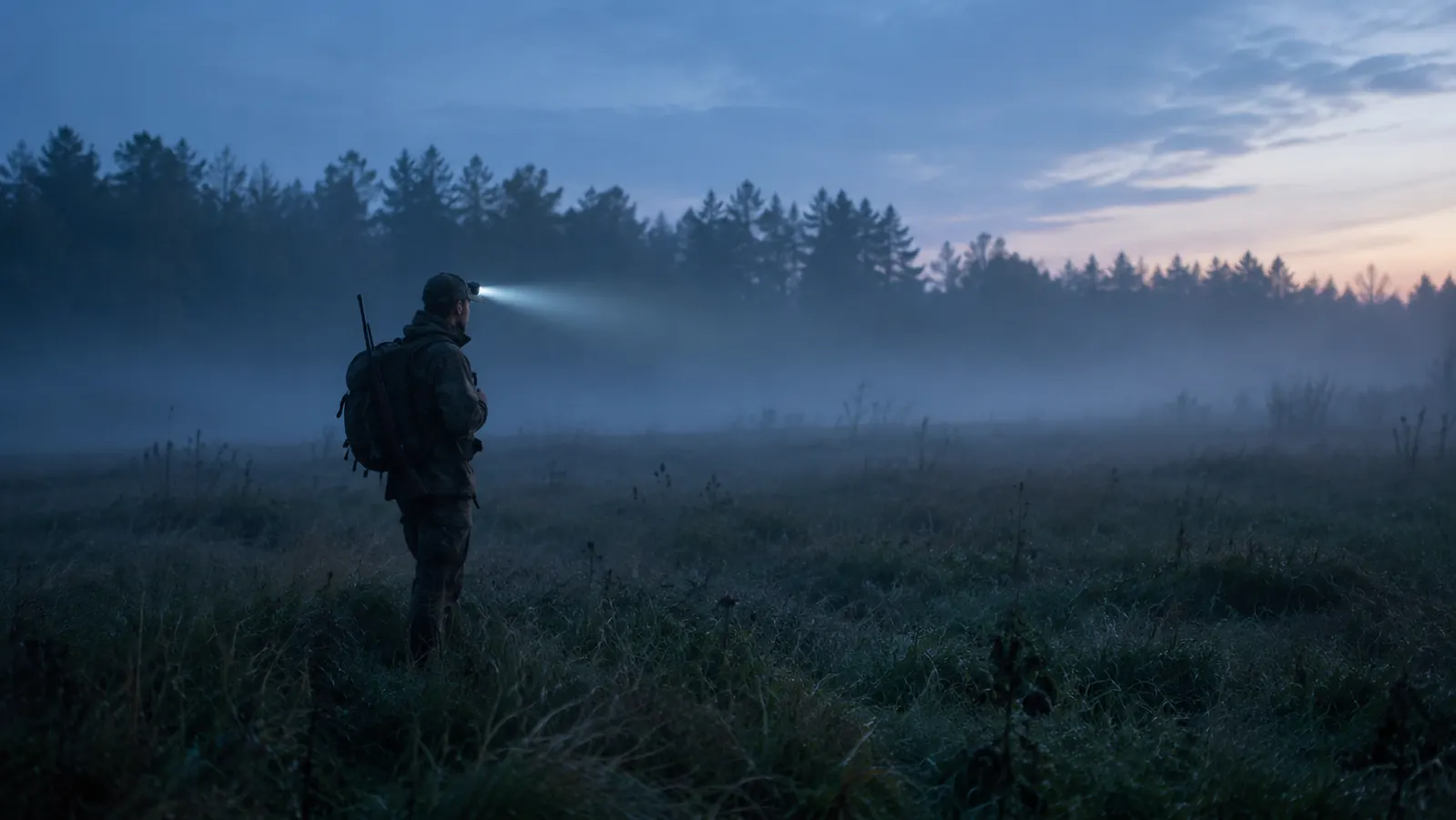
The first time I used the LHKNL headlamp for real was the second Saturday of October, sitting in a ground blind on my buddy Harlan's farm before the sky had any business being light. Temperature was 31 degrees, wind out of the northwest at maybe 12, and I had to rig a decoy, set a thermos where I could reach it, and check my rifle scope without fumbling in the dark. My old headlamp, a cheap twist-focus thing I'd owned for eight years, had started flickering the week before, so I grabbed the LHKNL out of the box it came in and strapped it on over my cap. That morning it did everything I asked, and I've used it nearly every hunt and most fishing trips since. This is the long-term review, six months in, from a guy who keeps gear until it breaks and gets annoyed when it does.
I'm Cole Brandt, 51, from outside Mitchell, South Dakota. I hunt whitetail and pheasant, fish walleye and pike on the Missouri River reservoirs and the glacial lakes, and I work as a county road maintenance foreman, which means most of my outdoor time happens in the dark, early, and in weather that would send a fair-weather person back to bed. The LHKNL headlamp has been on my head for pre-dawn walks to the blind, for untangling anchor ropes on a 16-foot aluminum boat, and for a dozen ice fishing trips where the only light for a mile was the one strapped to my forehead.
The Quick Verdict
For the money, the LHKNL is the headlamp I reach for first. It's bright enough to walk a field line, the battery genuinely lasts a full weekend of short uses, and the strap hasn't stretched out of shape. It's not a premium backcountry light, and the beam pattern takes some getting used to, but for a working hunter and ice angler it's hard to beat.
Amazon Check Today's Price →The headlamp that's been on my head since October
Six months of pre-dawn blinds, boat ramps, and ice shelves. If you want the same one I've been using, check today's price on Amazon.
Amazon Check Today's Price on Amazon →How I've Used It
I've used the LHKNL in four distinct settings since October, and each one tested something different. The first was the deer blind, where the job is mostly hands-free light for small tasks: loading a magazine, finding a glove, reading the wind direction without turning on a phone screen. The second was pheasant hunting with my yellow Lab, Tucker, where the headlamp comes on for the walk in and the walk out, and the dog needs to see me clearly enough to stay close. The third was open-water fishing on the Missouri River reservoirs, where I'm reaching into a tackle box, tying knots, and netting fish in the dark before sunrise. The fourth was ice fishing, which is the hardest test of all because the air is cold enough that batteries die fast, and the light reflects off snow in a way that can blind you if the beam is too tight.
The pattern I settled into: I charge it fully on Friday night, use it Saturday morning for the walk in and the tasks at the blind, use it again Sunday morning, and it still has enough left for a midweek evening trip. I have not once had it die on me mid-use. The closest call was a January ice fishing trip when the temperature sat at minus 4 with wind, and the light dimmed noticeably after about three hours of continuous use. It didn't go out, it just stepped down, and when I switched it to the lower setting it ran fine for the rest of the afternoon. That's the behavior I want from a battery in the cold: predictable, not sudden.
I also used it for a handful of non-hunting jobs, because that's what happens when a headlamp lives in the truck. I've worn it changing a flat tire on the shoulder of Highway 37 in November, crawling under the house to find a frozen pipe, and walking the dog on nights when the moon was useless. In every one of those cases it did the job without drama, which is about the highest compliment I can pay a piece of gear.
Brightness and Beam Pattern: What It Actually Looks Like on the Ground
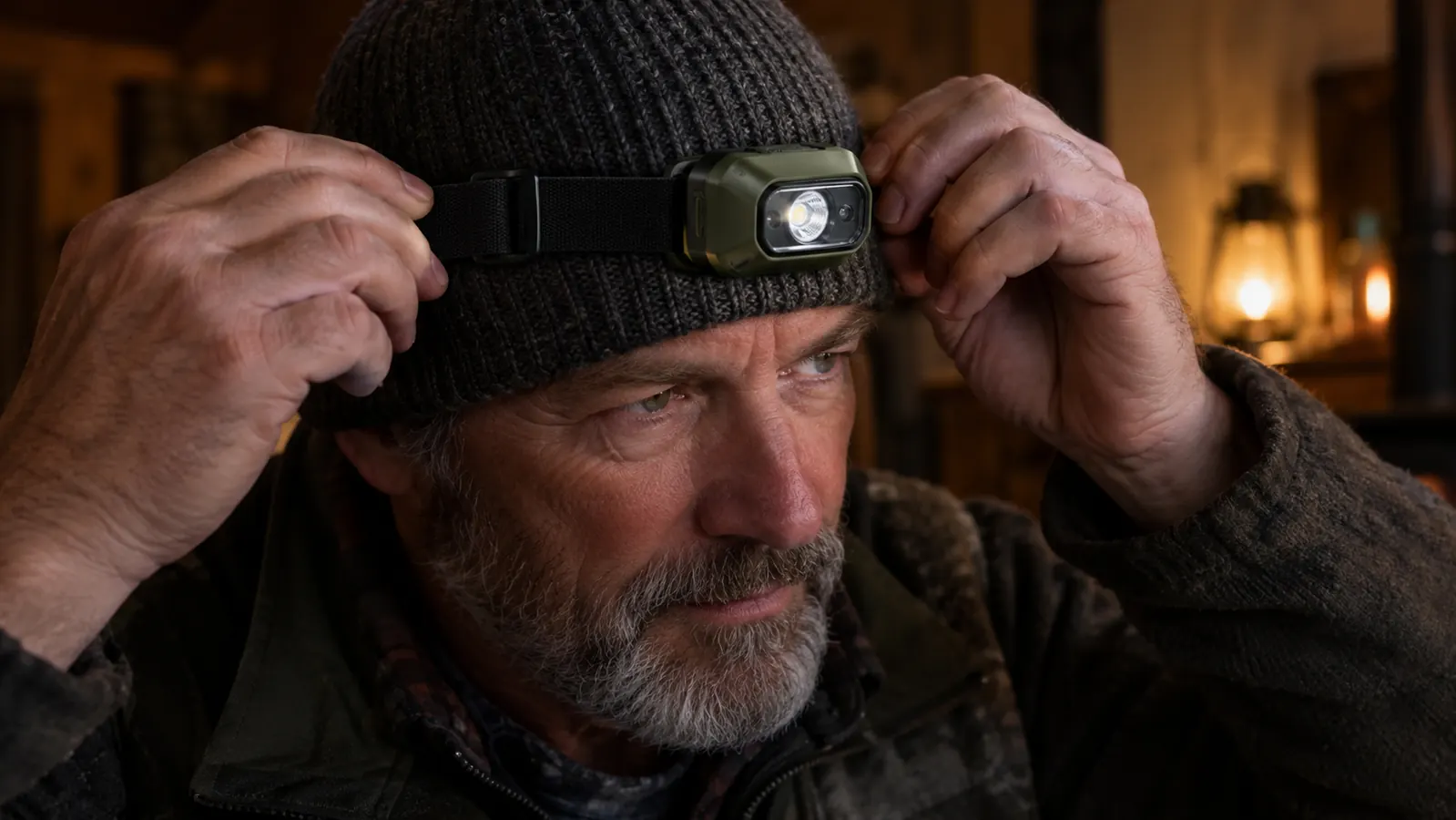
The headline number on the box is the lumen count, and I'll be honest: I don't own a light meter, and I don't trust lumen claims from any brand that sells a headlamp for this price. What I can tell you is what the beam does on the ground. On the high setting, the LHKNL throws a usable pool of light maybe 80 to 100 yards down a gravel road, which is more than I need for walking. The center of the beam is bright and fairly tight, and the edges fall off quickly, so you get a clear hotspot rather than a wide, even wash. That's the thing that took me the longest to get used to. When you're walking a field edge at night, the hotspot makes you want to scan side to side, because the spill light on the edges is dimmer than I'd like. For task work, though, that hotspot is exactly right. It puts light where your hands are and doesn't light up the whole blind.
The low setting is where I actually live most of the time. It's bright enough to tie a knot, find a dropped hook, or read a license, and it's dim enough that it doesn't wreck your night vision or light up the inside of a blind like a stadium. On ice, I used the low setting almost exclusively after the first trip, because the high setting on fresh snow is genuinely uncomfortable. The reflection comes straight back at you and you end up squinting at your own feet. The medium setting splits the difference and is what I use for walking in the dark. Three settings is the right number. I've owned headlamps with five or six modes and I spent half my time cycling past modes I didn't want.
One thing I noticed early: the beam has a slight cool tint to it, which is common in this price range. It doesn't bother me for walking or fishing, but if you're the kind of person who likes to see natural color at night, like when you're field-dressing a bird and want to see what's what, the cool tint takes a little getting used to. It's not a reason to avoid the LHKNL, but it's a real difference between this and a premium light with a neutral or warm emitter.
Battery Life and Charging: The Part That Matters Most in January
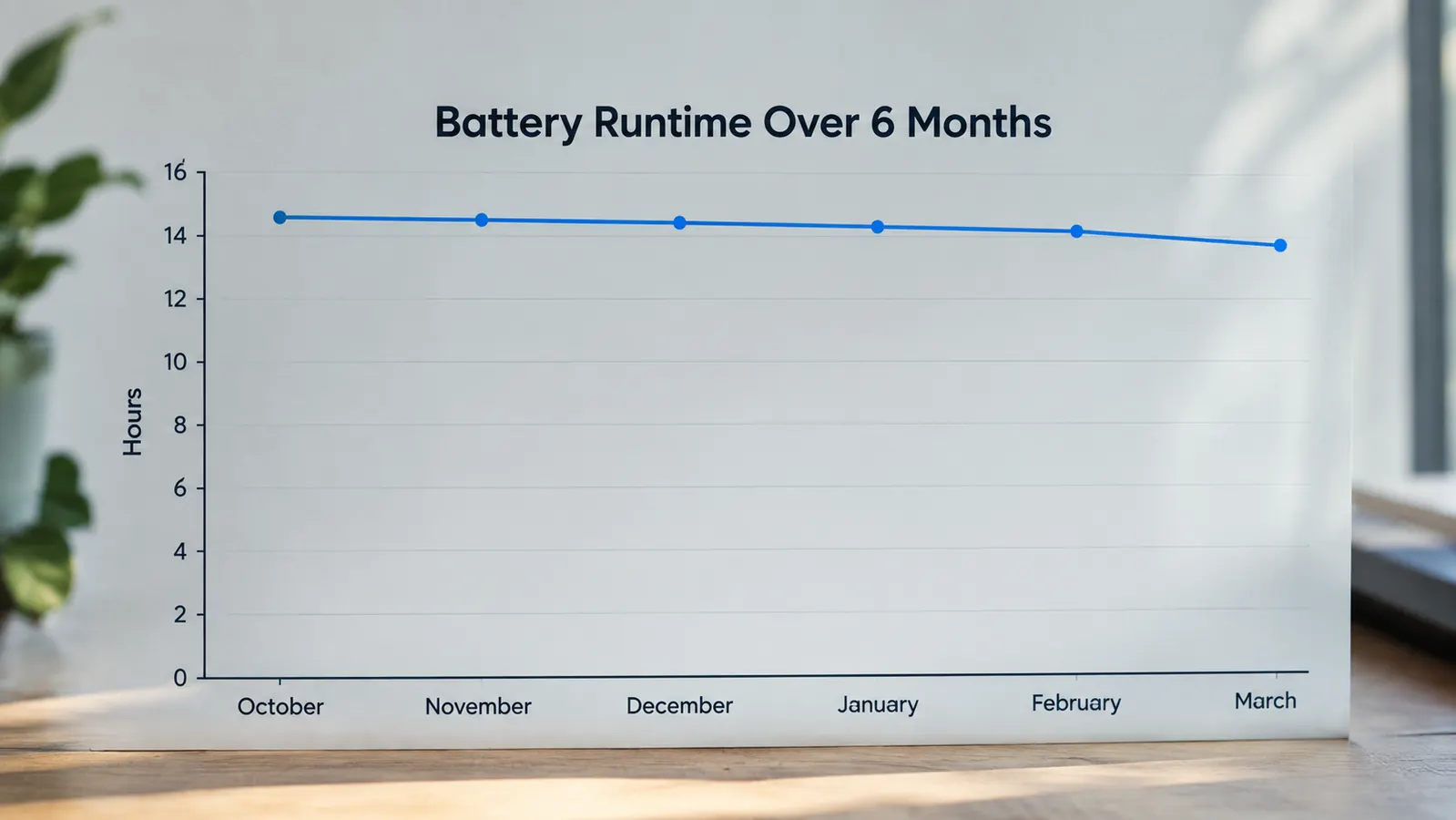
Battery life is the reason I kept this headlamp instead of returning it after the first week. The manufacturer's claimed runtime is generous, as it always is, but my real-world pattern has been consistent since October. A full charge gives me roughly four to five hours of mixed use on the medium and low settings, spread across multiple trips. If I run it on high continuously, I get closer to two and a half hours before it steps down. That matches what I need: I'm not a night hiker doing eight-hour trail miles, I'm a guy who needs light in bursts, and the LHKNL handles bursts better than anything I've owned.
The charging setup is a USB port under a small rubber flap on the side of the housing. It takes about three hours to go from dead to full, and I've charged it with a wall adapter, a truck USB port, and a small power bank in the boat. The flap seals well enough that I've never had moisture inside, even after a wet morning on the river. The battery indicator is a small light on the side that shows green when charged and red when it's getting low. It's not fancy, but it's honest, and I've learned to trust it. When it goes red, I have maybe 20 minutes of high output left, which is enough warning to switch to low or head back to the truck.
The cold-weather test is the one that matters to me, because I ice fish from December through March and I've killed more batteries in cold than in all other conditions combined. On a January trip when the air was minus 4 and the wind was up, the LHKNL ran for about three hours on medium before I noticed the light stepping down. It never shut off, and it recovered after I let it warm in the truck for a few minutes. That's the behavior of a lithium battery doing its best in the cold, and the headlamp's low-battery warning gave me enough time to switch settings instead of being left in the dark. I've had cheap headlamps die without warning at 10 degrees, so this is a real point in the LHKNL's favor.
Comfort, Strap, and Build: What Six Months of Use Does to a Headlamp
The strap is the part I expected to fail first, and it's the part that has surprised me the most. It's a wide elastic band with a grippy strip on the inside, and after six months of regular use, including being stuffed into a hunting pack, thrown onto the truck seat, and worn over a knit cap, it still holds snug without digging in. I wear it over a thin cap in October and a heavy insulated cap in January, and the strap adjusts easily between the two. The housing is plastic, and it has a few scuffs from being dropped on gravel and banged against the boat gunwale, but nothing has cracked or loosened. The tilt mechanism, which lets you angle the beam down toward your hands, still clicks into place firmly. That's the small thing I use constantly, and it's the first thing to get sloppy on cheap headlamps.
The weight is a non-issue. I forget it's on my head after about 30 seconds, which is the highest praise I can give any headlamp. I've worn it for a four-hour morning in the blind without needing to take it off and shake my head. The battery is built into the housing rather than in a separate rear pack, and while that means the front is a little heavier than a fancy two-piece setup, it also means there's no cord to snag on brush or a deer stand. For the way I hunt and fish, the simplicity is worth more than the weight savings.
The one build complaint I have is the button. It's a single rubber button on top of the housing, and it works fine with bare fingers, but with heavy gloves it takes a deliberate press. I've missed it a few times in the dark, especially when I'm wearing insulated mittens. It's not a dealbreaker, but if LHKNL asked me what to change, I'd say make the button bigger and easier to find by feel. I've also learned to press it with the pad of my thumb rather than the tip, which helps with gloves.
What I Liked
- Battery genuinely lasts a full weekend of short uses on one charge
- Low setting is perfect for blind work and doesn't wreck night vision
- Strap stays snug after six months of hard use and adjusts over any cap
- USB charging works with a wall adapter, truck port, or power bank
- Cold-weather behavior is predictable: it steps down instead of dying
- Tilt mechanism still clicks firmly after months of use
Where It Falls Short
- Beam has a tight hotspot and weak spill, so walking takes more scanning
- Button is hard to press with heavy gloves or mittens
- Cool-tinted light makes colors look off when you need to see detail
- High setting on fresh snow reflects back hard and can be uncomfortable
It never shut off, and it recovered after I let it warm in the truck for a few minutes. That's the behavior of a lithium battery doing its best in the cold.
How It Compares to What I Used Before
Before the LHKNL, my main headlamp was a twist-focus model I bought at a farm supply store for pocket change back in 2016. It took three AAA batteries, the switch was a rubber button on the side, and by the end of its life it flickered every time I moved my head. I also own a much more expensive headlamp that a friend loaned me for a week, and I'll be straight with you: the expensive one has a wider, cleaner beam and a warmer tint, and the battery management is more refined. But it costs several times what the LHKNL costs, and for the way I use a headlamp, the difference shows up mostly when I'm comparing them side by side in the living room, not when I'm actually out in the field.
The LHKNL sits in a sweet spot. It's not the cheapest headlamp on Amazon, and it's not the best headlamp money can buy. It's the one that does 90 percent of what a premium headlamp does, at a price that doesn't make me wince when I drop it on the boat ramp. I've dropped it, by the way, twice on gravel and once on ice, and it's still working. That's the test that matters to me. I don't need gear that I have to treat like a camera lens. I need gear that works when I forget it's there.
Who This Is For
The LHKNL is for the person who needs a dependable headlamp for real outdoor work and doesn't want to spend a week's worth of gas money on one. If you're a deer hunter who walks into a blind before sunrise, a pheasant hunter who needs hands-free light for the walk out, a walleye angler tying knots on a dark boat ramp, or an ice fisherman who spends January evenings on a frozen lake, this headlamp will do everything you ask of it. It's also a great choice for the non-hunter who just needs a solid light for the garage, the dog walk, or the camper. The battery life and the simple three-setting interface make it a good gift for a dad or a grandpa who doesn't want to learn a complicated menu system.
If you're the kind of person who wants one piece of gear that does everything, and you'd rather buy once and never think about it again, the LHKNL is a strong candidate. It's not going to impress the guy who owns a high-end backcountry setup, but it's going to be the headlamp that's still working in the truck glovebox five years from now. That's the kind of gear I trust.
Who Should Skip It
If you're a dedicated night hiker covering long miles in the dark, or a trail runner who needs a wide, even beam to see the whole path at once, the LHKNL's tight hotspot will annoy you. You'll spend the whole hike scanning side to side, and you'd be better served by a headlamp with a floodier beam, even if it costs more. Same goes for anyone who needs to see accurate color at night, like a bird hunter who wants to tell a rooster from a hen in low light, or a photographer working after dark. The cool tint is a real limitation.
I'd also tell someone with arthritis or limited hand strength to think twice. The button takes a firm press, and the tilt adjustment, while solid, is stiff when the headlamp is new. If you struggle with small buttons and stiff hinges, you'll fight this light more than you'll enjoy it. And if you're the type who loses charging cables, be aware that this headlamp is rechargeable only, so you'll want to keep the USB cable in the same place every time. There's no backup AAA option if you forget to charge it.
Six months in, it's still the first thing I grab
If you want a headlamp that handles pre-dawn blinds, boat ramps, and ice fishing nights without drama, this is the one. Check today's price on Amazon and see if it fits your setup.
Amazon Check Today's Price on Amazon →