
I'll be straight with you. I bought a WOSPORTS mini trail camera last fall because I needed a second set of eyes on a creek crossing I couldn't watch from the stand, and I didn't want to spend cellular-camera money to get it. Six months later, I know exactly what this camera does well, what it does poorly, and which of my hunting buddies should never buy one. This is the honest version, the one that starts with the part that broke.
The WOSPORTS mini trail camera is a 30MP, 1080P motion-activated camera with IR night vision and a waterproof housing, sold at a price that makes it an easy impulse buy. It is also a camera with a plastic latch that failed on mine in the middle of a South Dakota winter. Both of those things are true, and any review that tells you only one of them is not doing you any favors.
The Quick Verdict
A genuinely good budget trail camera for close-range setups, with a latch that will test your patience and a trigger speed that will test your expectations.
Amazon Check Today's Price →The budget trail camera I still keep in the woods
For the price of a tank of gas, the WOSPORTS mini trail camera puts a reliable set of eyes on a creek crossing, a field edge, or a fence line. It has limits, and I list every one of them below. But for close-range scouting on a budget, it has earned its spot in my pack.
Amazon Check Today's Price on Amazon →How I've Used It
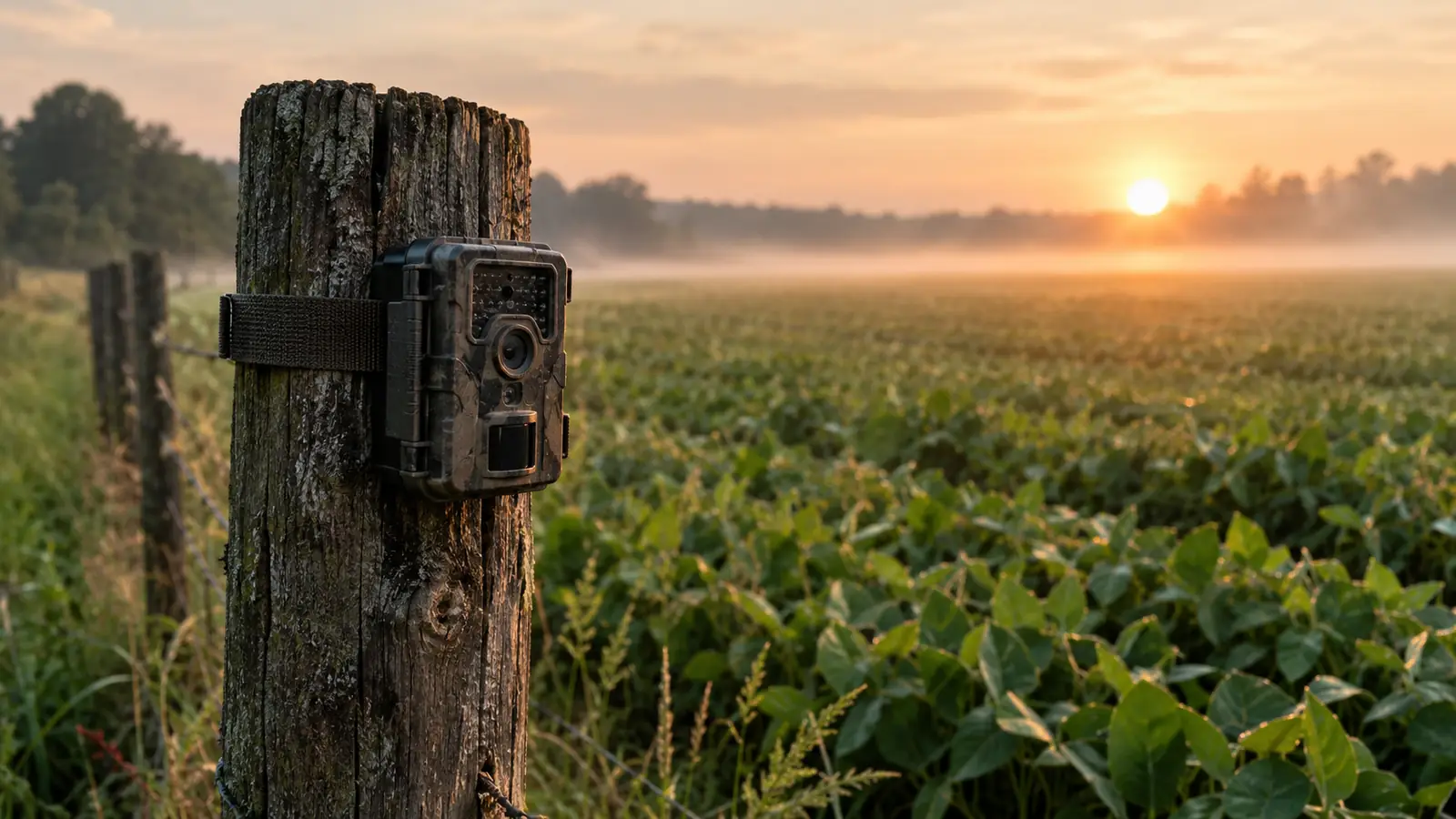
I ran this camera from late September through early March on a friend's farm ground about twenty miles from Mitchell, South Dakota. It sat on a fence post at the edge of a soybean field for the first month, then moved to a tree along a creek crossing when the deer shifted. That stretch covered a bow season, most of rifle season, a stretch of pheasant hunting, and a January cold snap that hit minus 12 degrees for a week straight.
The camera ran on eight AA batteries, which I swapped once in early December. I set it to take three photos per trigger with a 30-second delay, and I checked the card every two to three weeks. That is normal use for me, not a scientific lab test. I did not drop it from a tree stand, I did not submerge it in a stock tank, and I did not try to make it fail. I just used it the way most guys I know use a trail camera.
The first thing I noticed was how small it is. The WOSPORTS mini is noticeably smaller than the full-size cameras I have run, which makes it easier to tuck against a tree trunk and harder for a passerby to spot. The strap is the standard adjustable kind, and it held the camera snug on both the fence post and the tree. The mounting plate on the back is a simple slot design, and I had no trouble getting it level.
What Breaks: The Latch Problem
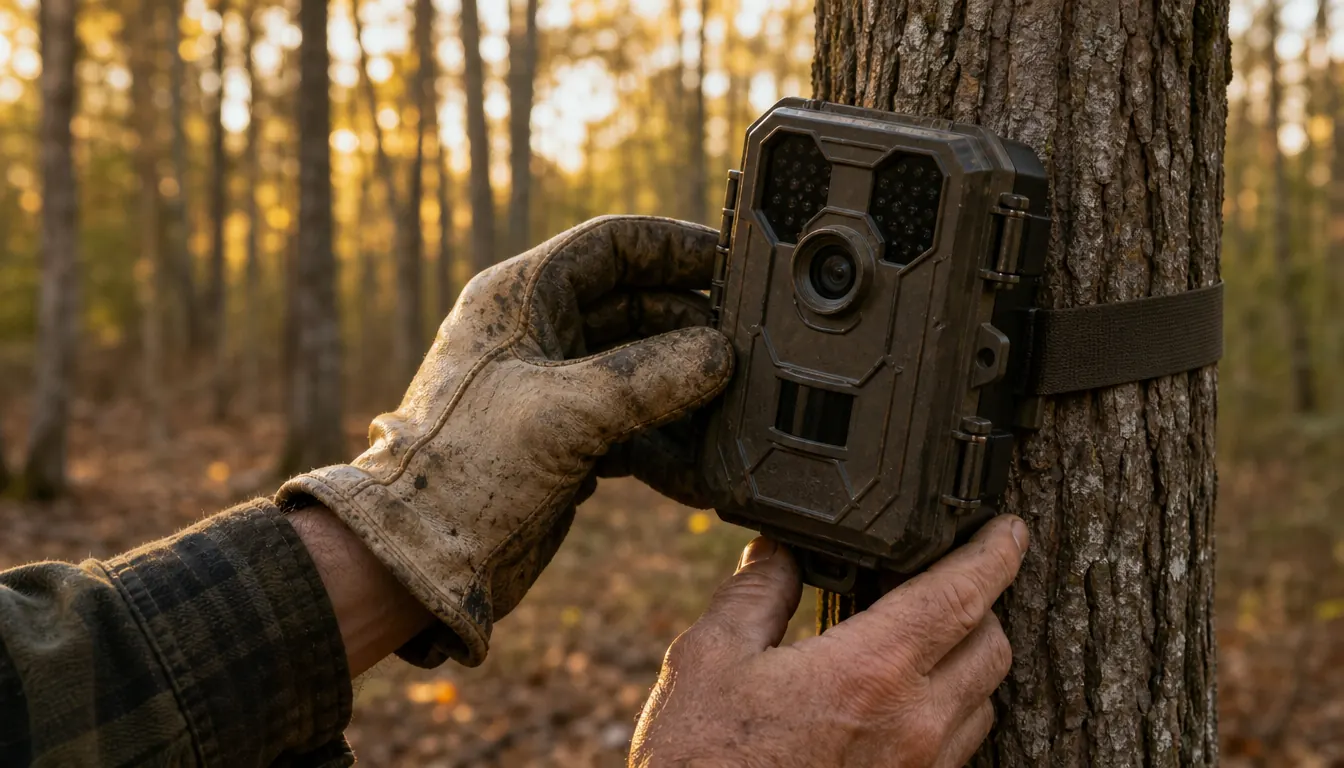
Here is what nobody tells you in the product listing. The latch that holds the weatherproof door shut is the weakest part of this camera. Mine failed in January, in the middle of that cold snap. I went to swap the SD card, and the little plastic tab that keeps the door closed had cracked. The door still closed, but it no longer locked. From then on, I carried a strip of electrical tape in my pack to keep it sealed.
I have seen the same complaint from other owners, so I do not think I got a bad unit. Cold weather makes plastic brittle, and this latch is thin. If you run cameras in a climate where the temperature drops below zero for weeks at a time, plan on the latch being a wear item. A wrap of electrical tape or a small bungee around the body will keep the door shut, and neither costs much.
The rest of the housing held up fine. The rubber gasket around the door stayed soft, the battery compartment stayed dry, and the SD card slot never gave me trouble. I did not see any condensation inside the lens, even after a freezing rain in November. The weak point is specifically the latch, and it is worth knowing before you buy.
The latch on my WOSPORTS mini cracked at minus 12 degrees. A strip of electrical tape fixed it. That is the honest review in one sentence.
What Holds Up: Battery Life and Image Quality
The battery life surprised me. I expected to swap AAs every three weeks based on some of the reviews I read, but mine went from late September to early December on one set. That is about ten weeks of steady use, with the camera taking a few hundred photos a week during the rut. I used standard alkaline batteries, not lithium, and the camera never shut down early on me.
Image quality is good for the price, with one important caveat. In daylight, the 30MP sensor produces clear, well-exposed photos of deer at 20 to 30 yards. The IR night vision is where the camera shows its budget roots. At close range, inside 25 feet, the night photos are sharp enough to count points and identify individual deer. Beyond about 40 feet at night, the images get soft, and you will not be able to reliably read antler details.
The 1080P video mode works, and the audio is decent for a camera in this price class. I caught a buck grunting on video in early November, and the sound was clear enough that I could hear the scrape he was working. The video files are large, so bring a bigger SD card than you think you need. A 32GB card filled up faster than I expected during the rut.
Trigger Speed and Detection Range: Set Your Expectations
The trigger speed on the WOSPORTS mini is advertised at 0.1 seconds, and in practice it is fast enough for a walking deer at close range. I got plenty of usable photos of deer moving along the creek trail, including a few where the deer was already halfway through the frame. What you will not get is the kind of crisp, perfectly centered shot that a camera twice the price delivers.
The detection range is the bigger limitation. This is a close-range camera. I got reliable triggers out to about 50 feet, and spotty triggers beyond that. If you set it on a wide field edge and expect to catch deer crossing 80 yards out, you will be disappointed. If you set it on a trail, a crossing, or a scrape, it does exactly what you need it to do.
The detection angle is also narrower than the full-size cameras I have used. The camera needs to be pointed roughly at the trail, not off to the side. I learned this the hard way when I set it at an angle to cover two trails at once and ended up with a card full of empty frames and deer butts. Point it straight down the trail and it works.
Setup and Daily Use
Setup is genuinely easy. The menu is simple, the buttons are labeled, and I had the date, time, photo mode, and delay set in about five minutes without reading the manual. The strap is long enough to go around most trees, and the slot mount lets you level the camera by eye. For a guy who does not read manuals, this camera is about as painless as it gets.
The one thing I would change is the battery door. It is a separate panel on the bottom of the camera, and it is stiff. The first few times I changed batteries, I was sure I was going to break it. It loosened up over time, but I still open it carefully. The SD card slot, by contrast, is easy to access and sits behind the main door.
The camera is also genuinely waterproof in the way that matters. It sat through a freezing rain, a wet snow, and a week of thaw in March, and the inside stayed dry. I would not trust the latch to survive a hard drop onto frozen ground, but the housing itself did its job.
What I Liked
- Small enough to hide low on a tree or in brush where other hunters walk past it
- Clear daytime photos and usable night shots for telling bucks from does
- Batteries lasted most of the early season with steady trail traffic
- Inexpensive enough to run two or three cameras on different trails
- Simple setup menu I could work in the field without the manual
Where It Falls Short
- The latch on the housing feels flimsy and needs to be closed carefully
- Trigger speed misses some deer moving fast across the frame
- Night range is shorter than bigger, more expensive cameras
- No cellular option, so you have to walk in to pull the card
What I would tell anyone buying the WOSPORTS mini is to treat it like a tool, not a toy. Close the latch carefully, strap it tight so it does not tilt in the wind, and face it up or down the trail instead of straight across it. Do that and it will give you honest pictures of what is walking past your stand, which is really all a trail camera needs to do.
One more small tip: label each SD card with a piece of tape and a marker so you know which tree it came from. When you run two or three WOSPORTS cameras, that simple step saves a lot of confusion at the kitchen table.
Who This Is For
The WOSPORTS mini trail camera is for the hunter who wants a cheap, dependable set of eyes on a specific spot. If you are running a handful of cameras on public land where theft is a real risk, or if you are just starting out and do not want to drop serious money on a cellular setup, this camera makes sense. It is also a good option for a second or third camera on a property where you already have a better camera covering the main travel corridor.
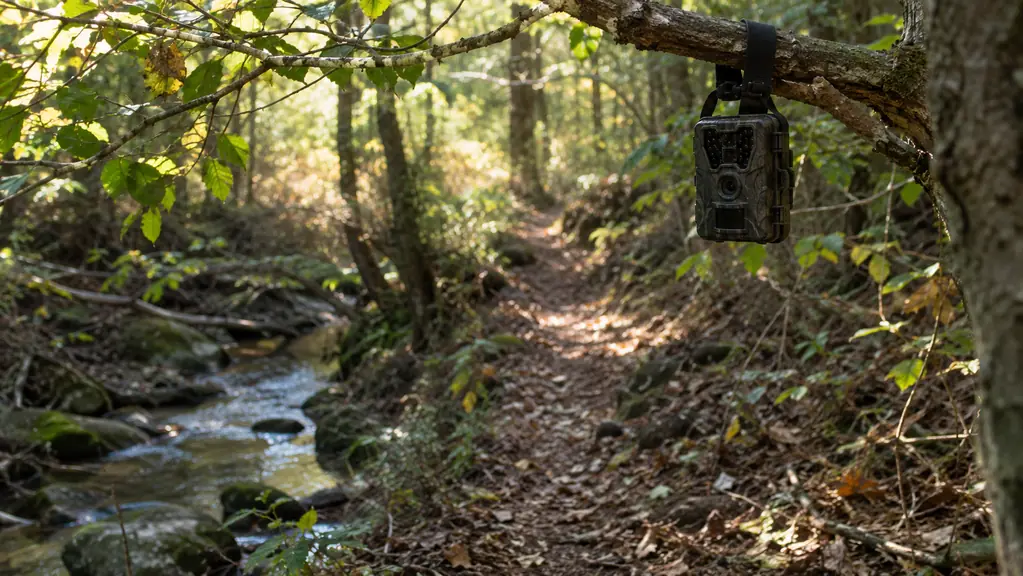
It is especially good for close-range setups: a creek crossing, a fence-line gap, a scrape, a mock scrape, a food plot corner. In those spots, the modest detection range is not a limitation, and the small size makes it easy to hide. For the price, you can afford to lose one to a thief or a tractor tire and not lose sleep over it.
Who Should Skip It
Skip the WOSPORTS mini if you need long-range detection on a big field or a power line. Skip it if you want crisp night photos beyond 40 feet. Skip it if you want to check your cameras from the couch, because this is not a cellular camera and it never will be. And if you hunt somewhere that stays below zero for months at a time, factor in the latch issue before you buy.
I would also tell a guy who is rough on gear to skip it. The plastic housing and the thin latch are not built for abuse. If your cameras get thrown into the back of a pickup with chains and a shovel, or if you hang them by dropping them from a stand, spend more money on something with a metal housing. This camera rewards a careful hand.
Alternatives I Considered
I ran this camera alongside a full-size budget camera from another brand, and the difference came down to size and detection range. The full-size camera detected deer farther out and had a sturdier latch, but it was bulkier and harder to hide. The WOSPORTS mini won the close-range job, and the full-size camera took the field edge. If I could only keep one, I would keep the WOSPORTS for the spots where I actually get my best photos.
I also thought about a cellular camera, because checking cards every two weeks in a South Dakota winter is its own kind of punishment. But the cellular camera costs several times as much, and it needs a data plan. For a guy who runs cameras on a budget, the WOSPORTS mini plus a pair of warm boots is the better math. If you want to see the tradeoffs laid out side by side, I compared the WOSPORTS mini against a cellular trail camera in a separate article.
The Bottom Line
The WOSPORTS mini trail camera is a good budget tool with one real weakness and a few honest limitations. The latch will likely crack if you run it through a hard winter, the detection range is short, and the night photos get soft past 40 feet. But the battery life is excellent, the daylight photos are clear, the setup is simple, and the price means you can buy two of them for what one premium camera costs.
I still have mine in the woods, electrical tape and all. It caught a heavy 8-pointer on the creek crossing three days before rifle season, and that photo changed where I hung my stand. For the money, that is all I needed it to do. If your setups are close-range and your budget is tight, the WOSPORTS mini is worth a look. If you need long range, cellular access, or gear that shrugs off abuse, spend your money elsewhere.
The WOSPORTS mini is still earning its spot in my pack
It has a plastic latch that cracked at minus 12 degrees and a detection range that tops out around 50 feet. It also ran ten weeks on one set of AAs and caught the buck that changed my season. If your setups are close-range and your budget is tight, this is the honest budget pick.
Amazon Check Today's Price on Amazon →