
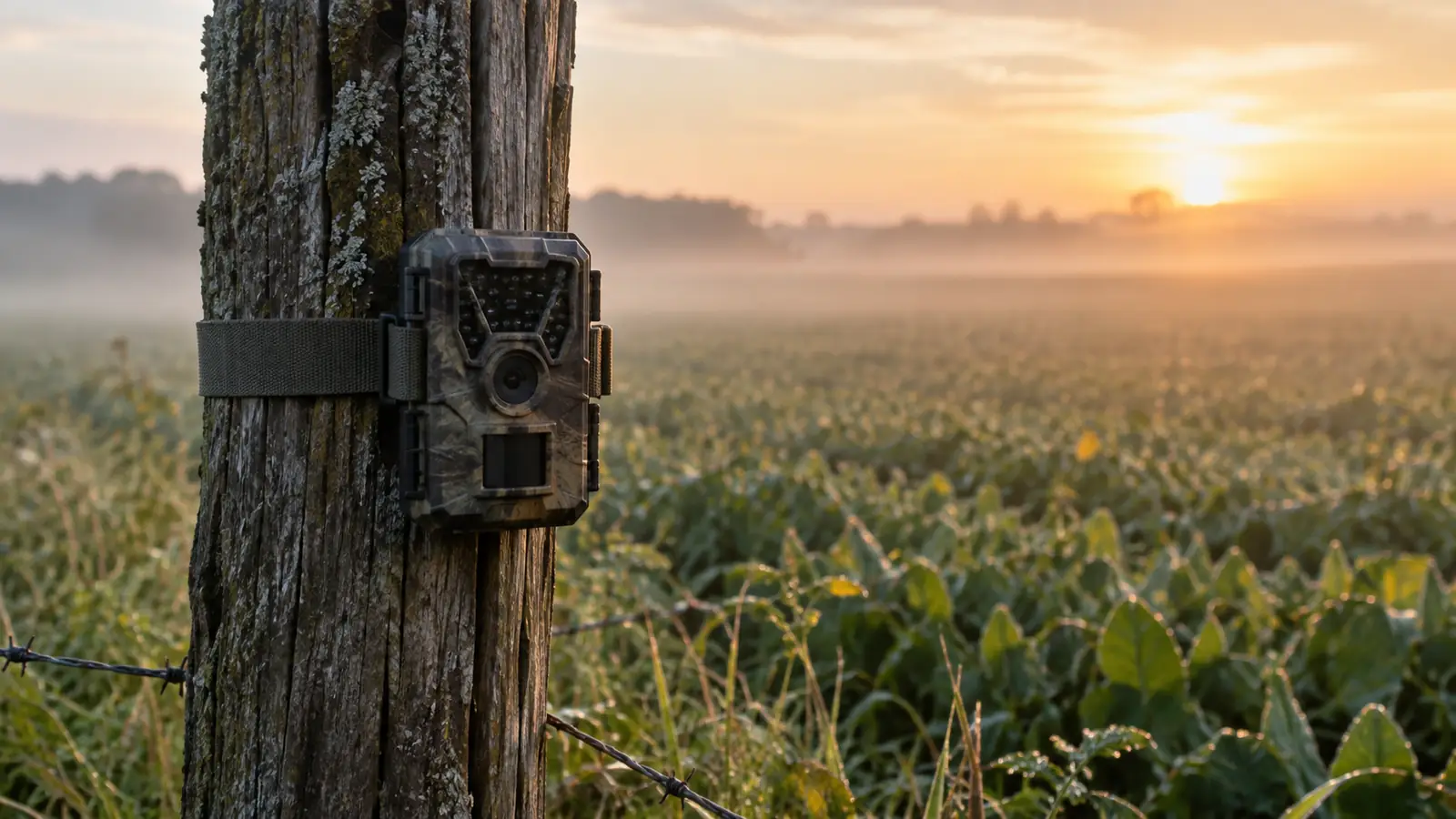
Every September I tell myself the same thing: this year I will not drive past the same two hundred acres every single morning just to see if a buck crossed. Then I do it anyway, because the alternative is a cellular camera, and the cellular camera plans add up fast. So when the WOSPORTS Mini showed up, I figured I would give the cheap route one honest season. I strapped it to a fence post on the back edge of a picked cornfield, set a cellular camera forty yards down the same fence line, and let them argue with each other from September through the end of November.
The short answer: the WOSPORTS Mini is a perfectly good camera for a specific kind of hunter, and a frustrating one for everybody else. It takes sharp daytime photos, the battery life is genuinely good, and it costs a fraction of what a cellular camera costs. But it does not send you anything. You have to go pull the card. That one difference changes how you hunt, and it is worth more than the price gap suggests.
| WOSPORTS Mini | Cellular Trail Camera | |
|---|---|---|
| Price | One-time cost, no plan | Higher upfront plus a monthly plan |
| Photo quality | 30MP daytime, sharp enough to read a brow tine at 40 feet | Usually 12MP to 20MP, plenty for ID but rarely better |
| Night images | IR flash, clear out to about 60 feet | IR or no-glow flash, similar range |
| Battery life | Three months on eight AAs in my test | One to three weeks on the same batteries because the radio is always listening |
| Remote viewing | None, you pull the card | Photos sent to your phone within minutes |
| Setup | Two minutes, no app, no signal check | App setup, SIM card, signal hunt |
| Best for | Hunters who check a camera every few days anyway | Hunters who need intel from a distance |
Where the WOSPORTS Mini Wins
The first thing I noticed was how little it asks of you. The WOSPORTS Mini takes eight AA batteries, and in my test that set lasted from September 14 through December 2, which is just shy of three months. I ran it in photo mode with a one-minute delay between triggers, and it fired somewhere north of 4,000 shots in that stretch. A cellular camera on the same fence line, same batteries, same settings, went dead in eleven days because the radio is always listening for a signal. I replaced those batteries four times before the WOSPORTS Mini finally asked for its first fresh set.
The daytime photos are genuinely good. I pulled a card in late October and found a sequence of a buck working a scrape at forty feet, and I could count the points on his left side without zooming in. The 30MP sensor is overkill for most of what we do, but it means you can crop a photo hard and still tell a 140-inch deer from a 120-inch deer. The IR flash reaches about sixty feet in my experience, which covers most field edges and trails. On a moonlit night in November I got a clear shot of a coyote at the back of a food plot, roughly fifty-five yards from the camera.
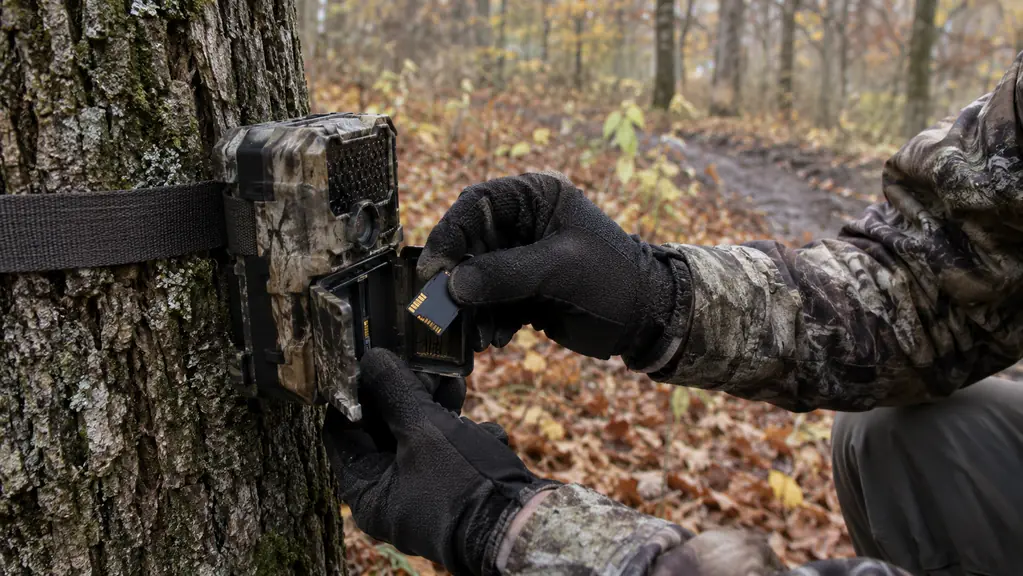
Setup is where the WOSPORTS Mini really separates itself. I opened the box, put in batteries, slid in a 32GB card, and strapped it to a post with the included strap. Total time was maybe two minutes, and I did not have to stand in a field holding my phone over my head looking for a signal bar. The cellular camera took me the better part of an hour the first time: app download, account creation, SIM card, signal check, and then a second trip because the first spot had one bar and the camera refused to send anything. If you are the kind of hunter who sets a camera and forgets it for a week, the WOSPORTS Mini is the easier tool by a wide margin.
If you check your cameras every few days anyway, the WOSPORTS Mini is the honest buy
It takes sharp photos, runs for months on one set of batteries, and skips the monthly plan entirely. I ran mine for a full season and the only thing it ever cost me was a walk to the fence line.
Amazon Check Today's Price on Amazon →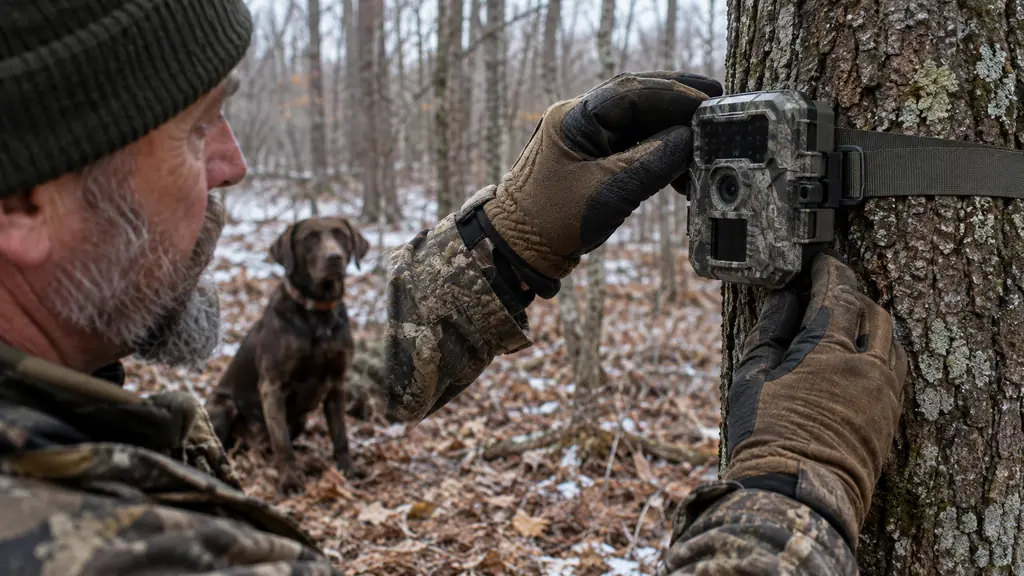
Where the Cellular Camera Wins
I am not going to pretend the cellular camera did not earn its spot. On October 17, a cold front moved through and I was at work by 6:30 in the morning. My phone buzzed at 7:12 with a photo of a buck I had been watching all season, standing in the picked cornfield at 9:40 that night. I would not have seen that deer until Saturday if I had been running the WOSPORTS Mini. That is the whole argument for cellular, and it is a strong one: the camera turns a two-hour round trip into a glance at your phone.
The cellular camera also wins on intel you can act on. When a big buck started showing up on the same field edge three nights in a row, I knew it by Thursday morning and adjusted my Friday evening sit accordingly. With the WOSPORTS Mini, I would have found out on Saturday, after the pattern had already shifted. For a hunter who works a full-time job and can only hunt evenings and weekends, that difference is real. The cellular camera is not a luxury item for that person. It is a tool that puts them in the right tree at the right time.
There is also the matter of pressure. Every time you walk in to pull a card, you are bumping deer and leaving scent on the edge of your best spot. I pulled the WOSPORTS Mini card every four or five days in October, which means I walked that fence line six or seven times in a month. The cellular camera got checked from my truck. If you are hunting a small property where deer pattern your movements, that alone can justify the monthly plan.
How Each One Fits a Weekend Hunter's Schedule
I work a county road maintenance job, which means most of my scouting happens on Saturday mornings and the occasional evening after work. That schedule is the main reason I started with a simple camera like the WOSPORTS mini. I pull the SD card once a week or so, look at the pictures on a laptop at the kitchen table, and plan the next weekend around what I see. It is slow, but it works for how much time I actually have.
A cellular camera changes that rhythm completely. You get pictures on your phone within minutes, which is great if you can act on them. The problem for me is that I usually cannot. Knowing a buck walked past at two in the afternoon on a Tuesday does not help much when I am out grading a gravel road forty miles away. For a hunter with a flexible schedule who can slip into a stand on short notice, the cellular camera makes a lot more sense.
Disturbing the Spot Less
The one real argument for a cellular camera that applies to anyone is that you walk in less. Every trip to pull an SD card leaves scent and noise on the trail, and a mature deer notices. With the WOSPORTS mini I try to limit that by checking cards in the middle of the day, going in with the wind in my face, and hanging the camera where I can reach it from the edge of a field instead of walking deep into the bedding cover.
That approach takes some planning, but it has worked for me on the farm ground and on public land alike. If your camera spot is deep in the timber and you cannot get to it without walking through the area you are trying to hunt, a cellular camera starts to earn its extra cost and its monthly plan. If you can reach your camera from the edge, the difference shrinks a lot.
Theft, Cost of Losing One, and Public Land
On public land I always assume a camera might walk off. It has happened to friends of mine more than once. That is where the WOSPORTS mini trail camera really shines. It is small, easy to hide low on a tree trunk or in a brush pile, and inexpensive enough that losing one stings without ruining the season. I would not hang a pricey cellular camera on public ground without a lock box, and even then I would worry about it.
The small size also makes the WOSPORTS easier to tuck out of sight. I have hung it at knee height facing a trail crossing, with a little brush around it, and walked right past it myself without noticing. A bigger cellular camera with an antenna is harder to hide from the next hunter walking the same trail.
Picture Quality You Actually Get
Both kinds of cameras take good daytime photos. At night the WOSPORTS mini gives me clear black and white shots out to a reasonable distance, enough to tell a doe from a buck and count points on a close deer. Cellular cameras usually send a smaller, compressed image to your phone first, and you often have to pay or wait for the full-size version. So the picture you see on your phone is not always better than what comes off the WOSPORTS card at the end of the week.
There is also a monthly cost to think about with a cellular camera that the box price does not show. Most need a data plan to send pictures, and that plan keeps billing whether deer are moving or not. The WOSPORTS mini has no plan at all. You buy it, put in batteries and an SD card, and that is the end of the spending. Over a few seasons, that adds up to a real difference.
Who Should Buy Which
Buy the WOSPORTS Mini if you hunt public land, if your spots are within a reasonable walk, or if you are already checking cameras every few days anyway. It is also the right call if you run a lot of cameras and do not want to pay a plan for each one. I have three WOSPORTS Minis spread across two properties now, and the total cost of running all three is the same as the cost of running one cellular camera for a year. For a budget-minded hunter who treats trail cameras as a scouting tool rather than a live feed, the WOSPORTS Mini is hard to beat.
Buy the cellular camera if your hunting ground is far from home, if you can only hunt a few set days a week, or if you are trying to pattern a specific mature buck. The monthly plan stings, but it buys you information at the exact moment it matters. I would not run a cellular camera on every post, but I can see running one on the one spot that always seems to hold the biggest deer. That is the honest split: the WOSPORTS Mini for coverage, a cellular camera for the one place where timing is everything.
The WOSPORTS Mini ran three months on one set of batteries. The cellular camera on the same fence line went dead in eleven days.
Start with the WOSPORTS Mini and see if you actually miss the phone alerts
Most hunters check their cameras every few days anyway. The WOSPORTS Mini covers that job for a one-time cost, and you can always add a cellular camera later for the one spot that matters most.
Amazon Check Today's Price on Amazon →