
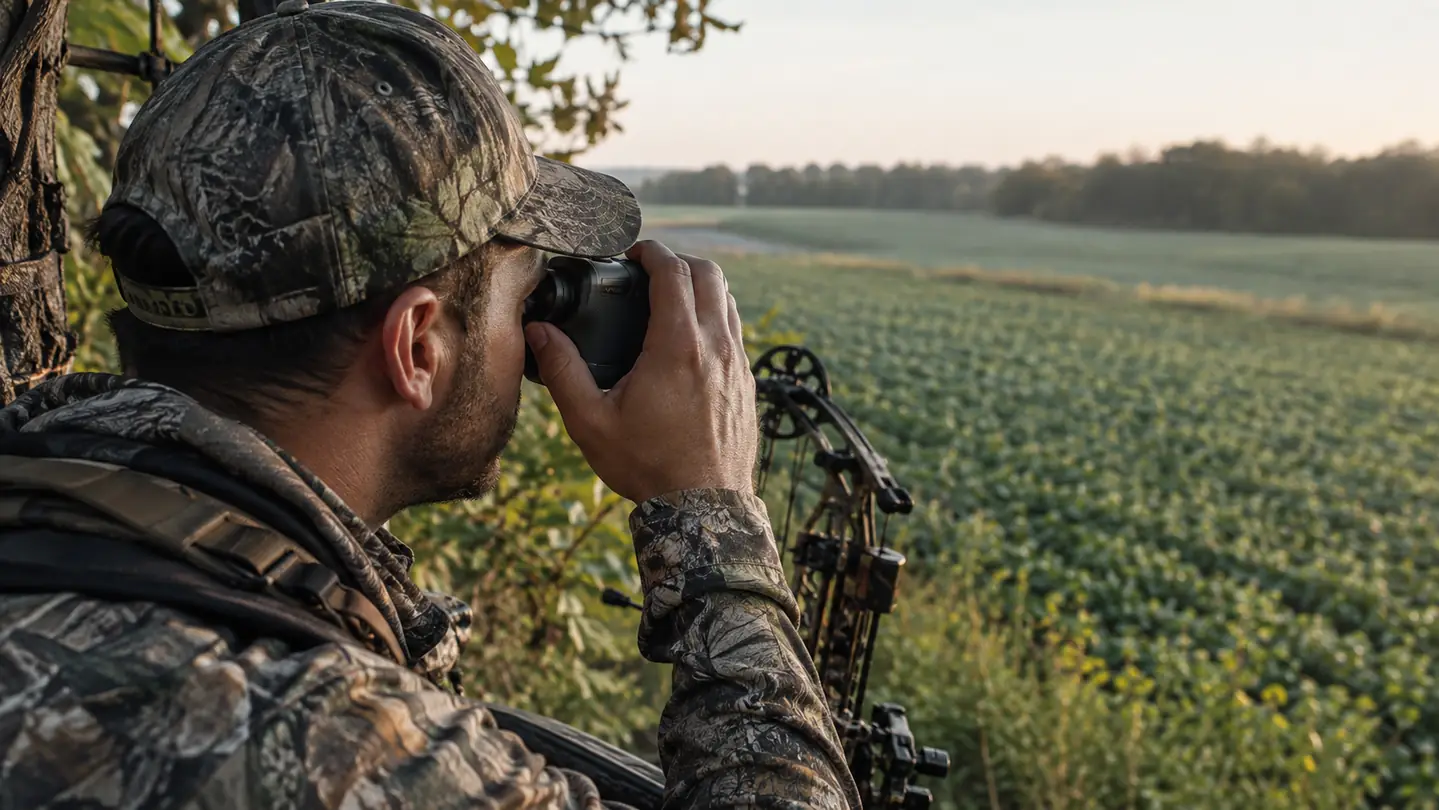
Every year I meet a hunter who climbs into a stand on opening morning, settles in, and then has to guess whether that scrape line is 30 yards or 45. He holds his bow up, squints, and talks himself into a shot he has no business taking. I used to be that guy. Then I started spending one afternoon in late August walking the same ground I will hunt in October, ranging every tree, trail, and field edge I can shoot to. That one afternoon has saved me more deer than any piece of gear I own, and the AOFAR HX-700N is the rangefinder I carry when I do it.
This is not a review of the AOFAR HX-700N, though I will tell you what it does and why I trust it. This is the exact routine I use to range a stand or blind before the season opens, step by step, the way I do it on public land and on my friend Gary's farm ground outside Mitchell, South Dakota. If you do this once before opening day, you will stop guessing in the moment that matters.
Range your stand before the season opens, not during it
The AOFAR HX-700N gives you 700 yards of ranging, a scan mode for moving targets, and a carrying case and battery in the box. It is the rangefinder I use for every preseason walk.
Amazon Check Today's Price on Amazon →Step 1: Set up your stand or blind first, then range from it
You cannot range your shooting lanes from the ground and expect the numbers to hold when you are 18 feet up a tree. Height changes the angle, and angle changes the distance your arrow or bullet actually travels. So the first step is to get your stand or blind in place exactly where it will sit on opening day. For a hang-on stand, that means hanging it, not leaning it against the trunk. For a ladder stand, set the legs where they will be and let it settle for a few minutes. For a ground blind, set it up, stake it down, and zip the windows the way you will hunt them.
Last September I hung a new stand on Gary's place on a Thursday evening. The next morning I climbed in and ranged the field edge at 38 yards. From the ground, the same edge read 31. That seven-yard difference is the difference between a confident shot and a marginal one, especially with a bow. If I had ranged from the ground and trusted it, I would have been guessing all season.
One more thing: do this on a day when the wind is not howling. The AOFAR HX-700N is waterproof and I have used it in rain and snow, but a 25 mph wind will move branches and grass and make it harder to hold a steady reading on a small target. Pick a calm afternoon and you will get cleaner numbers.
Step 2: Range every shooting lane and mark the number
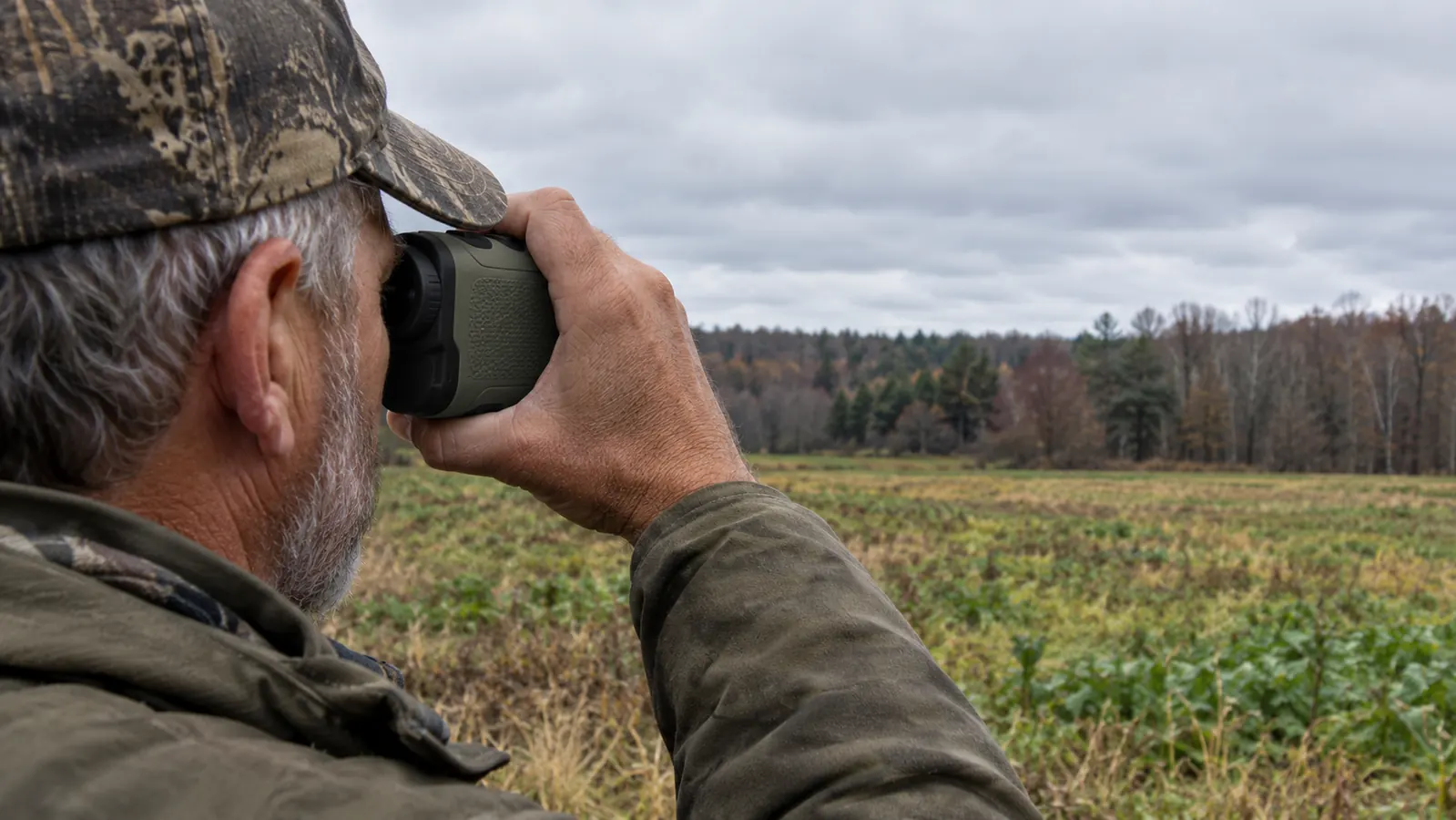
Once you are in the stand, work through every lane you can shoot. Start with the closest lane and move outward. For each one, aim the rangefinder at the base of the tree or the spot on the trail where a deer's chest will be, not at the top of the brush. A deer's body is low, and ranging high will give you a number that is longer than the shot you will actually take.
I write the numbers down. Not in my head, on paper. I keep a small notebook in my pack and I write the lane, the landmark, and the distance. Lane one, cedar tree, 24 yards. Lane two, fallen log, 31. Lane three, field corner, 38. Then I tape a copy of that list to the inside of my pack or the frame of the stand. When a buck steps out at first light and I cannot see the landmark clearly, I can look at the list and know the lane I am looking down is 31 yards, not 40.
The AOFAR HX-700N has a scan mode that keeps updating the distance as you sweep across a field, which is handy when a deer is walking a trail edge. But for preseason ranging, I use the single-shot mode and hold steady on each landmark for a second or two. I have found the readings repeat within a yard or two, which is all the precision a bow hunter needs.
Step 3: Range the trails, not just the clearings
Deer do not stand in the middle of a food plot and wait for you to range them. They walk trails, and most of those trails are at least partly screened by brush. So after I range the obvious lanes, I range the trail intersections, the spots where two trails meet, and the places where a deer would have to cross a gap in the fence line.
On Gary's place there is a trail that comes out of a thick draw and crosses a narrow opening between two cedars before it hits the soybean field. From my stand, that opening is 29 yards. I ranged it three times on three different days and got 29, 30, and 29. That consistency tells me the number is right. If a buck uses that crossing on opening morning, I already know the shot before he ever steps into the open.
This is also where I range the spots I cannot see from the stand. I will walk the trail later, but from the stand I range the far edge of the brush, the base of the big oak, and the corner post of the fence. Those are the landmarks I will use to estimate distance when a deer is moving and I do not have time to range him directly.
Step 4: Walk the same ground and confirm from the deer's side
After I range from the stand, I climb down and walk the trails I just ranged. I stand at the base of the cedar, at the fallen log, at the field corner, and I range back to the stand. The number should match what I got from above. If it does not, I recheck both readings. This catches the mistakes that happen when a branch or a dip in the ground hides part of the trail from the stand.
Two years ago I ranged a trail from my stand at 34 yards. When I walked down and ranged back, the AOFAR HX-700N read 41. I could not figure it out until I walked the trail itself and found a shallow ditch I could not see from above. A deer crossing that ditch would be at 41 yards, not 34, and my arrow would have dropped a foot low. That one walk saved me a miss I would have blamed on the wind.
I also use this walk to range the spots where I might take a shot with a rifle. The HX-700N reads out to 700 yards, which is more than I need on most of the ground I hunt, but it is nice to know the far field edge is 212 yards and the corner of the CRP is 318. When a buck steps out at the far edge in low light, I do not have to wonder.
Step 5: Write the ranges on your stand or blind before you leave
The last thing I do before I leave the stand is write the key ranges somewhere I can see them in the dark. On a hang-on stand, I use a permanent marker on the frame or on a piece of tape wrapped around the post. On a ground blind, I write on the inside of the window flap with a marker. Lane one, 24. Lane two, 31. Crossing, 29. Field edge, 38. That way, when I climb in at 5:30 in the morning and it is still dark, I can read the numbers without turning on a light.
I learned this the hard way. Three seasons ago I ranged a new stand in September, wrote the numbers in my notebook, and left the notebook in the truck. Opening morning a buck came down the exact trail I had ranged, and I spent the whole encounter trying to remember whether that trail was 31 or 36 yards. I held at 33 and missed clean over his back. The notebook did me no good sitting in the truck. Now the numbers go on the stand itself, and the notebook is just a backup.
If you hunt multiple stands, do this for each one and use a different color marker for each stand. Red for the north stand, black for the creek stand, blue for the blind. It takes ten minutes and it means you never have to guess which set of numbers belongs to which setup.
One last habit that has saved me more than once: range your marks again after the leaves come down. The trees you picked in September look completely different in November, and a scrape you ranged at 24 yards can be easy to lose once the understory thins out. It takes ten minutes from the stand with the AOFAR HX-700N, and it keeps your numbers honest for the rest of the season.
What Else Helps
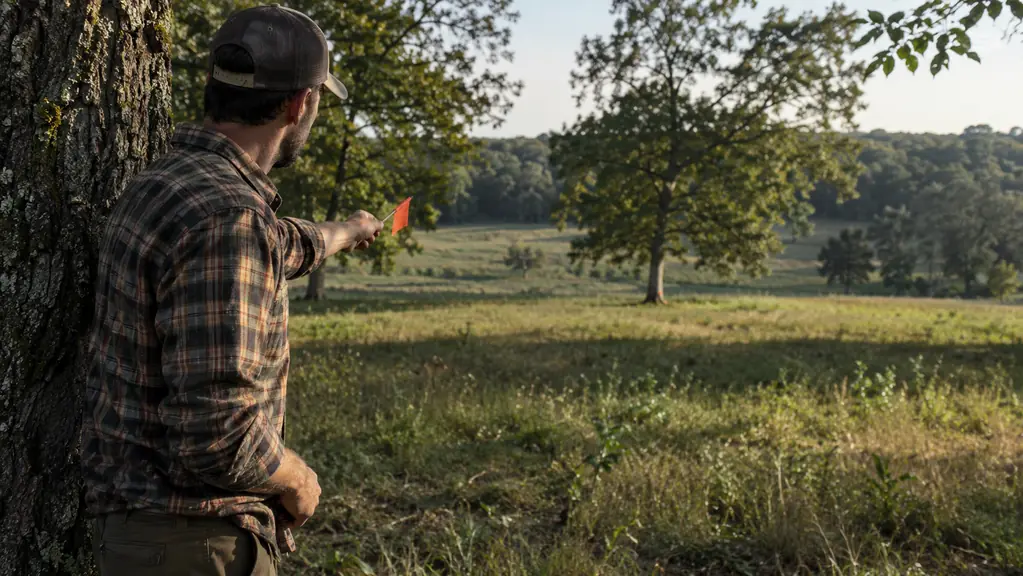
A rangefinder is the backbone of preseason ranging, but a few other things make the job easier. A small notebook and a pen, for starters. I also carry a roll of surveyor's tape and a handful of small flags. When I find a landmark that is hard to see from the stand, I tie a piece of tape or set a flag at the base of it. That gives me a visible reference point on opening morning, and it gives the rangefinder a clean target instead of a wall of brush.
I also bring a buddy when I can. It is hard to hold a rangefinder steady on a distant landmark while you are also trying to write down the number. One of us ranges, the other writes, and we swap. It cuts the time in half and it means the numbers get checked twice. If you hunt alone, set the rangefinder on a shooting stick or a bipod to steady it on the long reads.
And do not forget to range the spots you will shoot from, not just the spots you will shoot at. If you hunt from a blind, range the distance from the blind to the nearest tree, the feeder, and the trail crossing. If you hunt from a stand, range the distance from the stand to the trunk of the tree you are in. That number matters more than you think when a deer walks in close and you have to decide whether to draw or wait.
The seven-yard difference between ranging from the ground and ranging from the stand is the difference between a confident shot and a guess.
Do your preseason walk before the season opens
The AOFAR HX-700N is waterproof, reads out to 700 yards, and comes with a battery and carrying case. It is the rangefinder I trust for every stand and blind I hunt.
Amazon Check Today's Price on Amazon →