
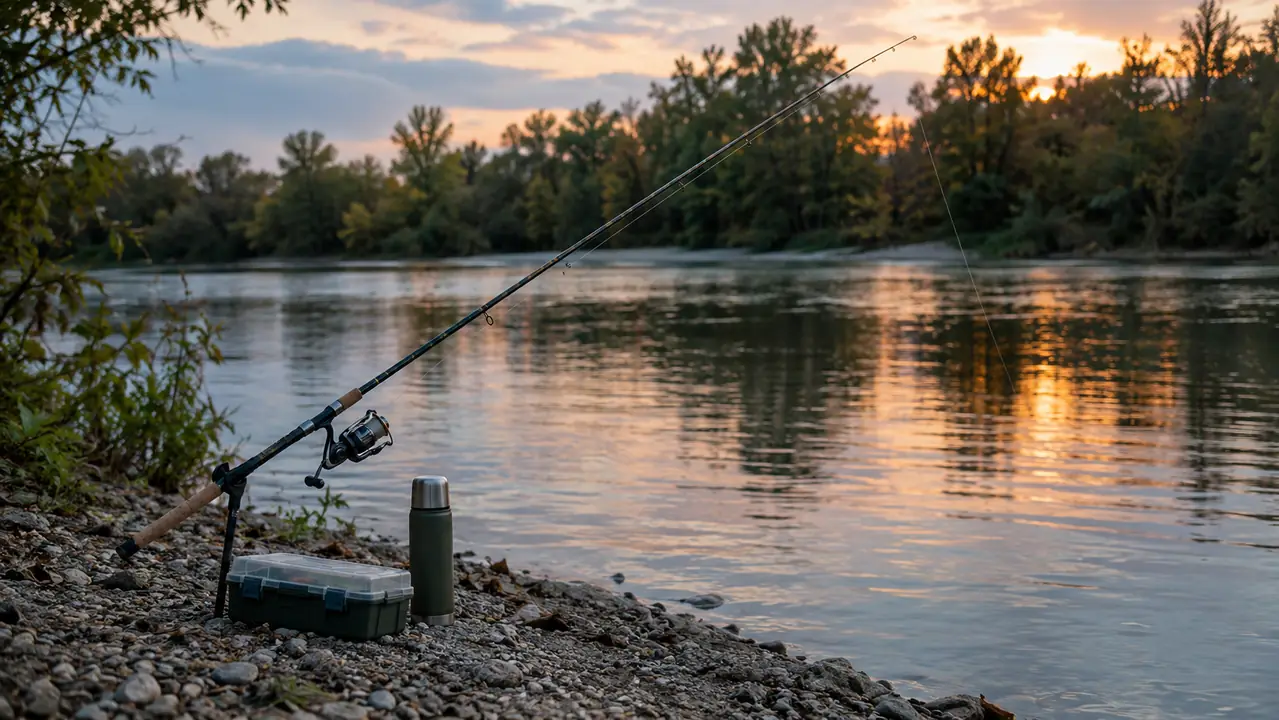
Most folks think you need a baitcaster and a boat to catch channel catfish. That's what I used to think too, until a late May evening on the James River changed my mind. I was standing on a gravel bank with a 7-foot Ugly Stik spinning combo I'd picked up at a farm supply store, and I caught more fish that night than I had caught all spring out of my 16-foot aluminum boat. The fish weren't trophies, just eater-sized channels, but they came steady from a dark hole that a dozen boat anglers had idled right over. That's when I started paying attention to what the bank offers: current seams, drop-offs, and places where a fish can sit and wait.
Channel catfish don't care about your rod's reputation. They care about three things: bait on the bottom, a hook that can handle their rough mouth, and line that doesn't give up at the first head shake. An Ugly Stik Catfish spinning combo handles all three without you having to remortgage the truck. I've used it on the James, on the Missouri below the dams, and on a couple of glacial lakes, and it's turned my shore fishing into something I plan around instead of a fallback for when the boat is down. That's not a knock on boats. It's just that a bank is a lot closer to a catfish's summer home than most people think.
Check Today's Price on Amazon
This is the 7-foot Ugly Stik Catfish spinning combo I'm talking about. If you want to see today's price and current availability, click the button below.
Amazon Check Today's Price on Amazon →Step 1: Rig for Bottom Contact
The biggest mistake I see from shore is a rig that floats. You thread a nightcrawler on a big hook, cast it out, and the bait just sits there in the current or drifts off the bottom. Channel cats are bottom feeders. They smell a meal and follow it down. If your bait is hanging a foot off the bottom, you're fishing for something else. I learned this the hard way on a cold April afternoon when I watched a group of cats roll right under my line while I worked a slip bobber twenty feet away. I've seen too many anglers set up on a flat bank with no current and wonder why they get skunked. The catfish are there, they're just not going to swim up to the bank if there's no reason to.
Use a simple sliding sinker rig. Slide a 1/2-ounce to 2-ounce egg sinker onto your main line, tie a swivel on the end, then run a 12-inch leader to a circle hook. The weight holds the bottom in current, the swivel keeps line twist from becoming a nightmare, and the circle hook does the job when the fish picks up the bait and turns. I tie a loop knot on the leader so the circle hook hangs at a natural angle. This rig is easy to cast and easy to tie in the dark, which matters more than you would think when the mosquitoes are out and you're trying to get a line wet before last light.
I keep three rods set up with different weights when I'm shore fishing. On a calm evening, the 1/2-ounce works. On the Missouri below the dam, I go to 2 ounces. On the James, where the current is slower, 1 ounce is my go-to. That way I don't have to retie every time the wind changes or the current picks up. A simple rig that stays where you put it is worth more than any fancy lure. I also use a small barrel swivel rated for at least 30 pounds, because a catfish can put more pressure on a knot than you'd expect. It also makes it easier to change a hook after a snag without cutting the whole rig.
Step 2: Find the Kind of Bank a Catfish Uses
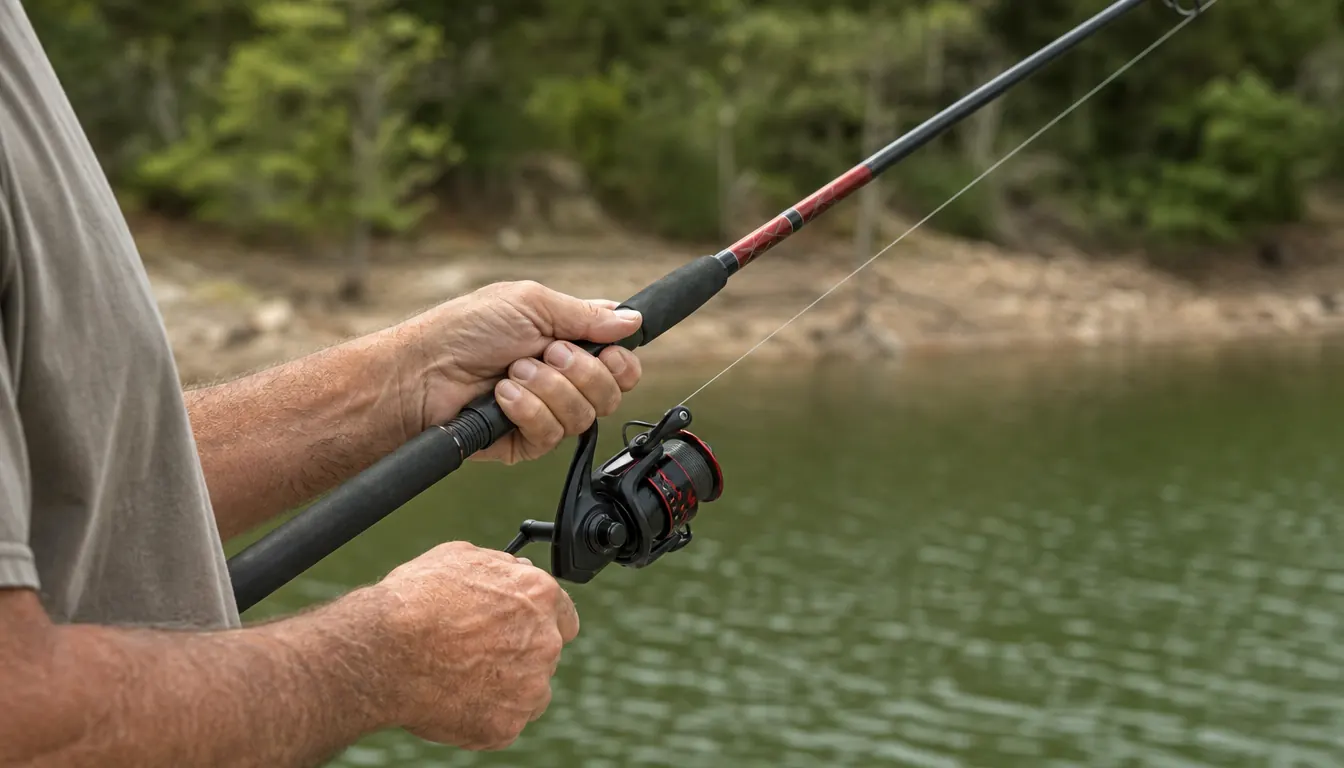
Channel cats don't roam the middle of the river. They hold along ledges, behind rocks, and in holes where the current slows. When I'm on the bank, I look for the same features a boat fisherman would: a fallen tree that elbows out into the water, a point where two currents meet and dig a hole, a cut bank that undercuts the shoreline. All of those hold baitfish, and wherever baitfish are, cats will be close. I've also learned to check the downstream side of any bridge pilings, because the scoured-out bottom there creates a natural feeding lane. At dusk I look for baitfish flicking at the surface. If you see shad moving, there's often a catfish underneath pushing them around.
On that first James River evening, I set up on a gravel point where the river bent hard to the right. There was a log jam thirty yards upstream, and a sandbar dropped off into a dark green hole right in front of me. I put the first rod straight out, the second one at a 45-degree angle, and the third one down-current. The bites came from the deepest, slowest water right at the base of the drop-off. The fish were there because the current had carved out a place where they could sit without working. I marked the spot with a set of trees on the far bank so I could cast to it again. By nine that night I had landed eleven cats between twelve and twenty inches, all on the same bait rig.
Timing matters too. I fish from about an hour before dark until midnight most nights when I can get away. The water cools off, the cats move in to feed, and the boat traffic thins out. On weekends I have had better luck after the jet skis and ski boats leave. It is easier to get a bite at 9 p.m. than at 5 p.m., no matter how good the spot looks in the afternoon. I'll bring a thermos of coffee and a folding chair, and I'll sit there through the slow stretch, because the best bite often comes right at the edge of the darkness.
Step 3: Bait That Stays Put and Smells Right
Channel cats are not picky, but they are not stupid either. They use their nose more than their eyes. You want bait that puts out a scent trail and stays on the hook. Cut shad is my first choice, and I cut it into chunks about the size of my thumb. I cut it right behind the gills so the blood gets in the water fast. If I do not have shad, a big nightcrawler threaded onto a circle hook works, and so does a piece of chicken liver wrapped in a small piece of netting so it does not wash off. I've caught cats on all three, but cut bait is the one I reach for first.
The trick with cut bait is to hook it so it does not spin in the current. Hook the chunk through the meaty part, not through the skin, and let the point come out the other side. When you cast, do not reel it in hard. Let it settle to the bottom and let the current do the work. The bait should stay put, not roll around like a leaf. A spinning bait does not smell right and it will not get hit as often. I've also started adding a small piece of nightcrawler to the hook point with the cut bait, which gives the bait a little extra wiggle and seems to trigger more bites in the summer.
I have also had good luck with store-bought stink bait in a dip tube, but you need a treble hook for that, and a treble hook can be a pain to get out of a big fish's mouth. I will use it when the bite is slow, then switch back to cut bait once they start hitting. Chicken liver can work well too, but it is soft and you need to rebait often. Cut bait is my workhorse because it stays on the hook and keeps working. If I am fishing a lake where shad are not present, I will use a chunk of sucker or a big worm, and I will keep the bait chunk on the hook longer than most people do. One evening I left a piece on for over an hour and a cat picked it up just as I was about to reel in and leave. That made me a believer in giving bait time.
Step 4: Set the Hook With a Circle Hook
With a circle hook, you do not jerk the rod like you are setting a bass hook. The hook is designed to rotate into the corner of the catfish's mouth when the fish turns after picking up the bait. All you need to do is reel down fast until the line is tight, then lift the rod in a steady sweep. Let the fish's own movement set the hook. This is hard for a lot of folks to believe, so I tell them to try it once and see for themselves. The first time I switched to circle hooks, I pulled the hook out of the first two cats because I kept yanking like I was bass fishing.
This is where the Ugly Stik's moderate-fast action helps. The rod loads up and gives you a smooth, controlled hookset that does not rip the bait out of a soft mouth. If you try to cross their eyes with a stiff rod, you will pull the hook out of a channel cat's jaw more times than not. I have been guilty of that myself. The Ugly Stik is forgiving enough that you can get away with a slightly hurried hookset. It also has enough backbone to turn a fish that heads for the nearest snag. It's not a broomstick and it's not a noodle. It strikes a good balance for a rod that doesn't need to be the most expensive thing in the truck.
I have learned to wait a little before setting the hook when I am using cut bait. If the line starts to twitch, I count to three. Then I feel for the weight of the fish. If the line comes tight and there is a steady pull, I reel down and lift. If it is just a nibble, I let it sit. That pause is the difference between landing a fish and coming up with an empty hook. The key is to let the rod load for half a second before you commit. On a June night last summer, I counted to three, lifted the rod, and felt a solid weight, then landed an 8-pound channel cat from a bank I had fished for two years without a good fish.
Step 5: Play the Fish From the Bank Without Overthinking It
Once the hook is set, the fight starts. A channel cat from shore is not going to run as far as a big lake trout, but they can strip line off a reel if you let them. Keep the rod tip up and let the drag do its job. The reel that comes with the Ugly Stik combo is spooled with line that is fine for most shore fishing, but I replace it with 10-pound mono because I like a little more shock strength around logs and rocks. I also check the drag before every cast, because a drag that is too tight will get you broken off in the first run. A fresh spool of mono also helps with casting, because old line has memory and coils off the reel like a corkscrew.
When the fish turns, do not try to horse it in. Let it take some line, keep steady pressure, and guide it toward open water. The biggest mistake I see is people walking up the bank with the fish. Stay put, keep the rod bent, and use your reel to bring it in. If it runs under a log, keep side pressure on and hope the line is fresh. Most lost fish come from giving the cat a chance to wrap you around something. I've lost enough fish to snags to know that keeping the line tight and sweeping the rod downstream early is the best way to steer a fish away from trouble.
Once you see the fish in the shallows, do not give it any slack. Reach down with a pair of needle-nose pliers, grab the hook, and shake it free. Channel cats have a gritty texture, but they are not slimy like some fish. If you are keeping dinner, a stringer through the bottom lip works. If you are releasing, wet your hands and let the fish swim off. Either way, keep the rod tip up until the fish is in hand. I also carry a small lip grip for the big ones, because a wide catfish can put up a fight on the bank and you do not want to get a hook in the hand. If you're on a steep bank, use a longer leader and keep the rod tip up until you have the fish in the net or your hand.
What Else Helps
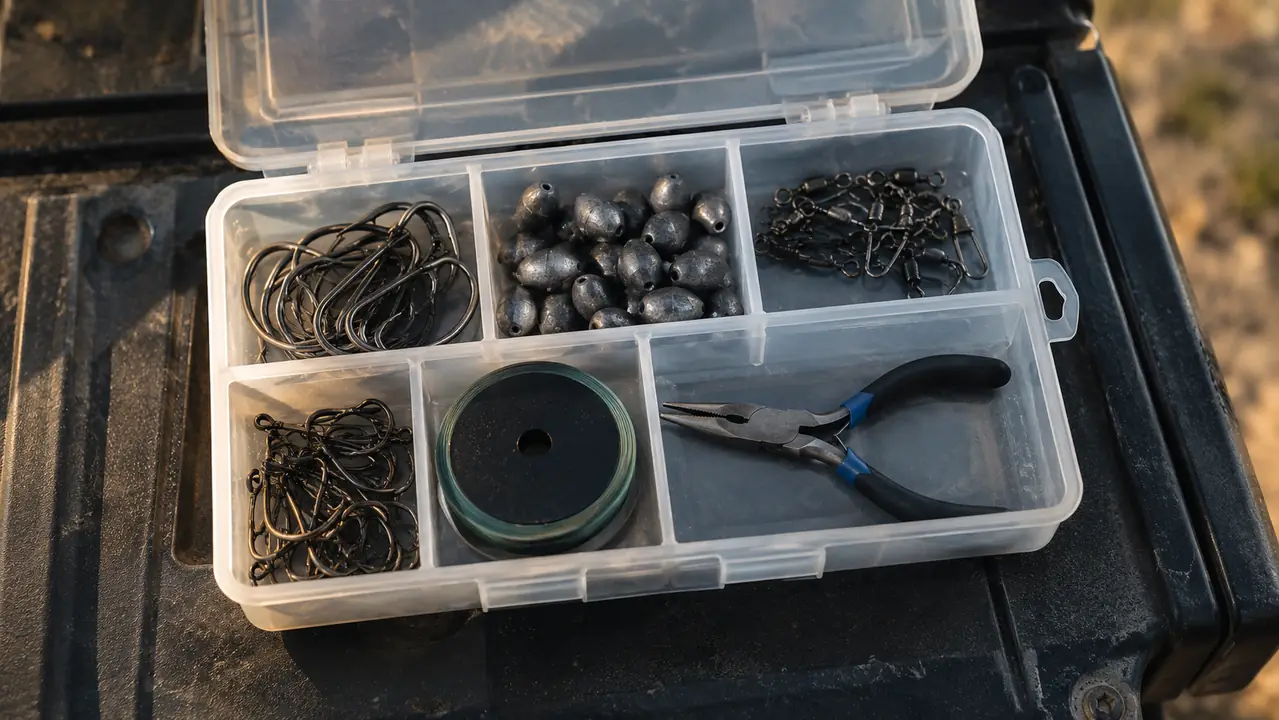
Beyond the basics, a few things make shore fishing for cats easier. A rod holder that sticks in the bank is almost essential because you'll have three rods out and you want to keep your hands free. I use a couple of cheap metal holders, but a good one with a foam insert won't scratch the Ugly Stik's blank. A headlamp helps when you're changing bait after dark, and a small tackle tray keeps hooks, sinkers, and swivels within reach. The Ugly Stik combo is not a super long rod, so you won't be casting a 4-ounce weight into the middle of the river. But for the kind of shore fishing most of us do, it's enough. I keep a second rod with a heavier sinker and a larger bait for the days when the current is ripping. That way I don't have to retie and can cover more water. I also keep a spare spool of 10-pound mono in the tackle tray, because you will eventually get snagged and you can't retie with a tangled spool. A folding chair and a thermos are not gear in the traditional sense, but they keep me on the bank longer, and that's where the bite is.
Channel cats don't care if your reel has expensive bearings. They care that the bait is on the bottom and the hook is sharp.
Check Today's Price on Amazon
Ready to rig one up for your next bank trip? The 7-foot Ugly Stik Catfish spinning combo is what I reach for when I'm fishing the James or the Missouri. Click below to see today's price on Amazon and current stock.
Amazon Check Today's Price on Amazon →