
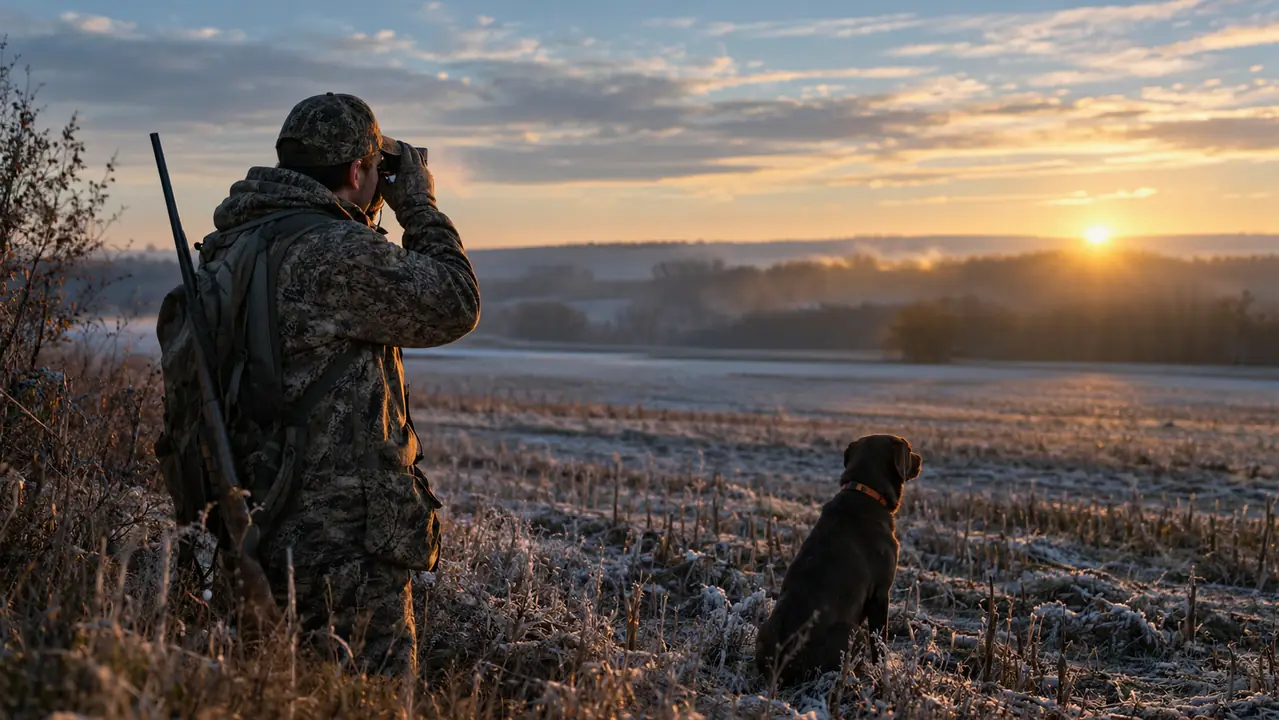
I spent last November in a cramped ground blind on a friend's farm outside Stickney, South Dakota, watching a small buck work a soybean field. The AOFAR HX-700N was on a lanyard around my neck, and it had already paid for itself three weeks earlier when I ranged a doe at 289 yards and knew I was outside my own comfortable shooting distance. That's the kind of rangefinder this is: not a toy, not the most advanced thing on the shelf, but a tool that does its one job well enough that I trust it with a shot.
AOFAR calls the HX-700N a 700-yard waterproof rangefinder, and it comes with a free battery and a zippered carrying case. The unit is compact, fits in a jacket pocket, and has 6x magnification. After two seasons of whitetail hunting, pheasant walking, and a couple of evenings on the Missouri River scouting shorelines, I have a clear opinion. It's a good budget rangefinder, but it has limits that the product description doesn't tell you. Here are the ones I found.
The Quick Verdict
A dependable budget rangefinder that gives consistent readings at realistic hunting distances. It's not built for extreme long range or speed, and the display has quirks, but for whitetail and pheasant work it's a smart buy.
Amazon Check Today's Price →If you're after a budget rangefinder that gets the basics right
The AOFAR HX-700N has become the unit I reach for when I'm heading out the door. It reads deer-sized targets at the distances I actually shoot, and it doesn't fall apart in my jacket.
Amazon Check today's price on Amazon →How I've Used It
Most of my ranging happens in the last hour of shooting light. That means I'm usually cold, a little amped up, and trying to hold the unit steady against a fence post or a shooting stick. I've used the AOFAR from a blind, from the edge of a picked cornfield, and from the cab of my pickup during preseason scouting. The pattern is the same: it reads a deer-sized target out to about 300 yards quickly, and anything beyond 350 takes a few seconds and a steady rest.
On a mid-December morning with the temperature around 14 degrees and wind gusting to 25, the unit sat inside my jacket for most of the sit. When a coyote crossed a frozen slough at what I guessed was 320 yards, I brought the rangefinder up and got a reading of 327 on the second attempt. The first attempt gave me a blank. That's the tradeoff with an affordable unit: it isn't always instant, but when it locks on, the number is solid.
I've also used the angle-compensation mode all through October from my bow blind and an old ladder stand. That mode gives you the horizontal distance, not the line-of-sight number, which is what you need when you're shooting down from a treestand or up at a hill. I set up a target at 30, 40, and 50 yards and compared the AOFAR's readings to a buddy's higher-end unit. The holdover numbers matched within a yard. That's the feature that makes this rangefinder worth owning for bow hunters.
For pheasant hunting, I don't range birds as much as I range edges and shelterbelts. The AOFAR is fast enough to give me a distance to a particular fencerow before I turn a dog loose on it. I've used it to decide whether to walk an extra 100 yards to push a drawn-out rooster, and to confirm distances for photos I'll never use. Tucker, my yellow Lab, doesn't care about the reading, but he's learned that when I put the rangefinder away, the next step is usually a flush.
On the first Saturday of October, I set up beside a farm lane and spent an hour checking the AOFAR against a measured distance wheel I'd borrowed from a buddy. I marked fence posts at 30, 50, 75, 100, 125, and 150 yards. The AOFAR read 32, 51, 76, 101, 124, and 152. Close enough that the difference wouldn't change my hold at any of those ranges. That test gave me confidence I didn't have after only reading the box.
The rangefinder also came with me on an ice fishing trip in January. I used it to spot a point on the far shore for a winter perch spot, and to confirm the distance to a hunter's orange flag a buddy had stuck in the ice. It read 214 yards on that flag from about 40 yards of elevation. Any rangefinder can do that, but the AOFAR did it without drama, which is what you want when your fingers are already half frozen.
What I Noticed Out of the Box
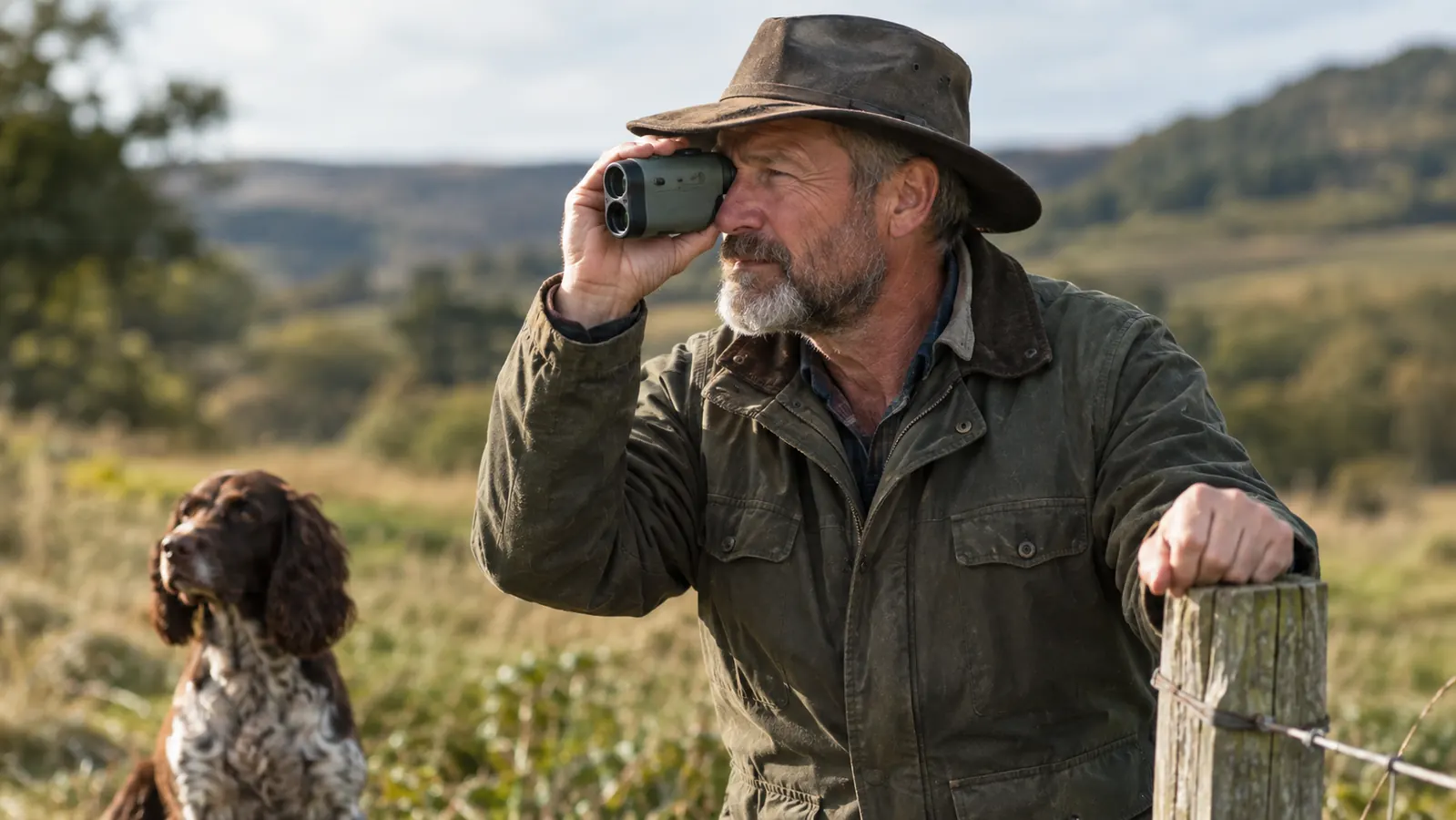
Out of the box, the AOFAR feels lighter than you expect, which is good when it's bouncing against your chest all day. The case has a belt loop and the lens caps snap on and off without much fight. The lanyard is thin, but it's worked for me. The included battery is a CR2, and it's been in the unit since the day I opened it, with hundreds of readings on it. That tells you the battery draw is modest, especially if you remember to power it down. There's no auto-off that kicks in while you're staring at something, but it does shut down after a couple of minutes of inactivity.
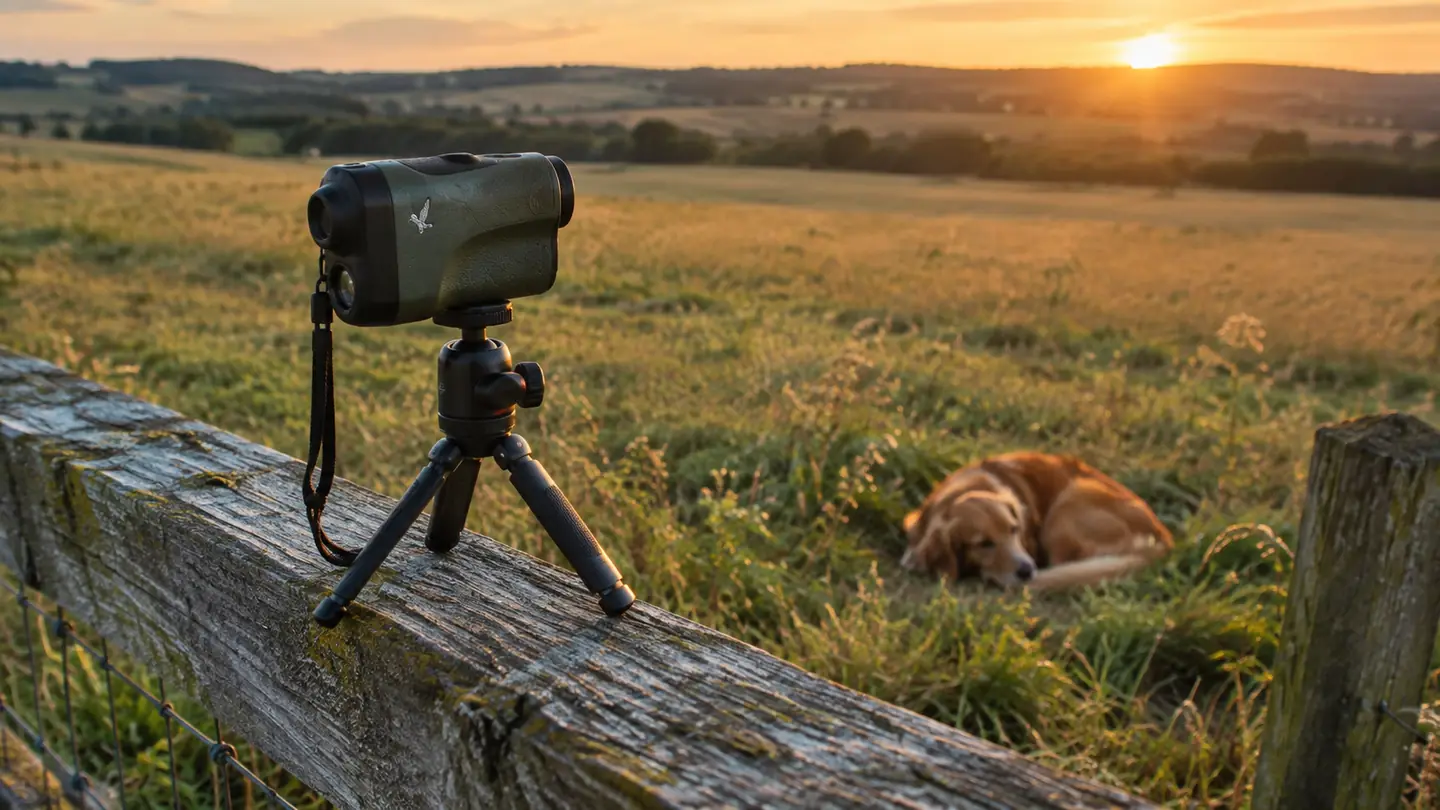
That tripod socket on the bottom is a detail most budget rangefinders skip. I used it once on a calmer day, set the unit on a cheap pistol grip tripod, and ranged a barn at 612 yards. Without the tripod, I couldn't hold steady enough past 450 on that same barn. For anyone who wants to range faraway terrain features, a little tripod is a cheap addition and it turns the AOFAR into a more useful tool.
The carrying case also has two small mesh pockets, one for the battery and one for a spare lens cloth. Small thing, but it means I don't have to dig through my pack for a cloth when the lens fogs up. The unit itself has a rubberized grip on the body, which helps when your hands are sweaty from a long walk. That's the kind of practical detail that keeps a budget piece of gear from feeling like a toy.
The 700-Yard Claim, Tested
The big number on the box says 700 yards, and that's true in the most forgiving condition: a large, reflective target in good light. I've ranged a white steel grain bin at 682 yards, and a semi trailer at 691. But a deer is not a grain bin. On a standing doe in a picked bean field, my reliable ceiling is around 400 yards, and only if she's broadside and the light is good. A brown animal against dark timber will often give you nothing past 300. That's not a defect in this unit specifically, but it's the gap between the sticker and the field.
What matters more is consistency. During firearm season, I ranged a doe at 402 yards from a field edge, then she took three steps and I ranged her again at 408. Those numbers make sense for a walking animal. When I re-range a stationary target, I get the same number, or within two yards, every time. That repeatability is what separates this from a cheap rangefinder that throws out random numbers. The AOFAR doesn't do that.
I'll also say the advertised 700 yards assumes you're using the unit like a spotter scope, not a hunting tool. The laser has to be held dead still, and the target needs some size. In the field, I mostly care about 100 to 400 yards, where this unit is genuinely capable. If you need to range a rock on a ridge at 650 while wearing gloves, you'll want a rangefinder with image stabilization or a built-in display that holds the reading longer. That costs a lot more money.
One thing I tested on purpose: the speed mode. It's for archery, and it gives you a readout of how fast the target is moving, which matters for leading a walking deer with a bow. I tried it on a flock of geese and on Tucker running after a bump, and the numbers seemed plausible, but I can't vouch for their precision. I'd rather have the angle compensation than the speed mode, and I'd bet most bow hunters feel the same.
One afternoon I ranged the goalposts of the high school field from the parking lot. The AOFAR read 104 yards to the near upright, and 212 to the far upright, which matched the known geometry. That's a level field, no brush, but it shows the unit's basic ranging logic is sound. I've run that same test with other budget rangefinders, and the AOFAR was the only one that didn't give me a wild reading on the bright metal.
The Buttons, the Display, and the Cold
Here's the honest friction. The buttons are small and stiff. The top of the unit has three: power, mode, and backlight. They work, but with early-season cotton gloves you have to press deliberately, and with a heavy mitt you'll probably have to pull it off. The mode button is a long press, and if you're trying to switch from distance to angle quickly, you'll get impatient. It's not a dealbreaker, but it's a reason to practice with your hunting gloves before opening day.
The display is a straightforward digital readout. The numbers are large enough to read at arm's length, and there's a backlight that helps in dim timber. The reticle is a small crosshair, and against a dark background it can be hard to pick up. I've learned to keep the backlight on in low light, which eats battery but makes the unit usable. It's the kind of compromise you expect at this price level, and it doesn't surprise me anymore.
The optics are decent for a budget unit. The image is clear enough to identify a deer as a deer at 300 yards, which is the job. There's a slight color cast and the edges get soft, but I'm not expecting a high-end scope. The eyepiece focuses with a ring, and it does hold focus once set. The lenses fog when you bring the unit from a warm truck into cold air, same as any rangefinder in this class, so I keep it in my jacket or under my vest until I'm ready to use it.
The waterproof bit has held up in rain and sleet, but I treat it as weather-resistant rather than a reason to find a creek crossing. I've had it out in a steady drizzle and in a wet snow that soaked my coat, and it kept reading. But if I drop it in the river, I don't expect it to come back. No electronics love cold, and this one is no exception. Keep it inside your jacket until you're ready to range, and it'll do the same for you.
The most useful thing I learned was to set the mode before I get into the stand. If I leave it in angle mode while I'm walking to the blind, it'll range trees and fence posts at the horizontal distance, which is fine. I keep it in standard distance mode until I'm set up, then switch to angle mode with one long press. That one habit eliminated most of my fumbling and made the buttons feel less annoying.
What I Liked
- Consistent readings on deer-sized targets out to 400 yards
- Angle compensation works for bow hunting from a treestand or hill
- Compact and light enough to carry all day
- Backlit display helps in low light
- Tripod socket makes it stable for long-range ranging
Where It Falls Short
- Advertised 700-yard range is optimistic on animals
- Buttons are stiff and awkward with heavy gloves
- Reticle gets lost against dark cover
- Lenses fog on temperature changes
- No ballistic calculator or Bluetooth for long-range shooters
The 700 on the box is the least important number. The number that matters is whether it reads the same deer twice.
Who This Is For
If you're a whitetail hunter who spends most of your time on public land or a friend's farm, and you rarely shoot beyond 300 yards, the AOFAR HX-700N is a smart choice. It's also a solid pick for pheasant hunters who want to range shelterbelts and cutouts, and for anyone new to rangefinding who wants to learn without spending more than they need to. The angle compensation puts it ahead of cheaper units that only give straight-line distance.
If that describes you, you don't need a fancy ballistic rangefinder. You need one that gives you a repeatable distance in the range you actually shoot and doesn't fall apart in your jacket. The AOFAR does that. It's the rangefinder I reach for on most hunts, and I've been reaching for it for two seasons now. That's the best recommendation I can give.
It's also a good first rangefinder if you're upgrading from guessing. I remember a few years back when I used to pace off distances to fences and shrubs, and I was wrong a lot more than I cared to admit. The AOFAR takes the guesswork out of the thing that matters most, and it does it without a steep learning curve. That's exactly what a beginner needs.
Who Should Skip It
If you're a western hunter shooting across canyons at 500-plus yards, or a long-range target shooter who needs wind and elevation solutions, this isn't the tool. It has no Bluetooth, no custom reticle, no ballistic outputs. It's a rangefinder, not a computer. A high-end unit will save you time and shots. The HX-700N will just give you a distance, which is all most of us need.
Skip it too if stiff buttons will drive you up a wall. I've gotten used to them, but I've also got a drawer full of gear I've bought because I ignored reviews about fiddly controls. If you want a rangefinder you can operate with mittens, look for one with big, separated buttons. The AOFAR isn't that. It's the honest version of a budget rangefinder, and that's exactly what I'm telling you.
And if you need the latest gear before everyone else, this won't satisfy you. It's built to a budget, and the finish shows it. But for me, that's not what hunting is about. I want a tool that gives me the same answer twice and doesn't weigh me down. The AOFAR does that, and it does it without pretending to be something it isn't.
The bottom line on the AOFAR HX-700N
It's not perfect, but it's honest, and it's the rangefinder I trust for most of my hunting. If you're in the market for a budget unit that handles real hunting distances, this is the one to look at first.
Amazon See today's price on Amazon →